Gerhard Herzberg Gesellschaft
Measuring and modeling x-ray wavemixing processes
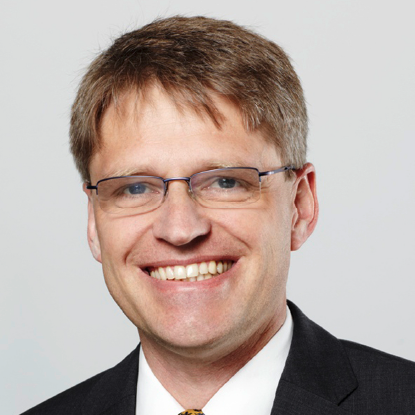
Christina Bömer and Dietrich Krebs, Deutsches Elektronen-Synchrotron (DESY), Hamburg
Using modern synchrotron and free-electron laser (FEL) sources, it has become feasible to study a wide range of nonlinear processes in the x-ray regime. In particular, this opens the possibility to transfer ideas from parametric nonlinear optics and quantum optics to shorter wavelengths, for which we will present experimental and theoretical examples in this talk.
Processes of interest comprise x-ray-optical wavemixing (XOWM) that can combine diffractive imaging capabilities with spectroscopic sensitivity for new material diagnostics: Using x-ray-optical difference-frequency generation, we have recently demonstrated the first application of nonlinear crystallography to spatially reconstruct the valence response in diamond at sub-Angstrom resolution.
Complementary processes of nonlinear diffraction, which derive from spontaneous x-ray parametric down-conversion (XPDC), on the other hand, provide access to quantum features of light-matter interaction. As an example, we showcase a series of experiments, in which we found that non-degenerate XPDC probes polariton-formation in the extreme-ultraviolet (EUV) and soft x-ray spectral ranges. Combined with theoretical modeling, these results enable us to trace the polaritonic dispersion and probe strong-coupling effects from a new vantage point.
As a third avenue for x-ray quantum optics, there has recently been a resurgent interest to extend XPDC into the degenerate regime, aiming to produce energetically equal x-ray photon pairs as a resource of entanglement. While these examples still face substantial challenges regarding their efficiency, they provide a promising outlook for future exploration.
Wann?
14. Juli 2026, 16:00-17:30
Wo?
Fachbereich Füsik
TU Campus S2|15, Raum 134
Schloßgartenstraße 7
64289 Darmstadt
Veranstalter
Fachbereich Füsik
Weitere Informationen
Tags
Kolloquium Quantentechnologien