News tagged with “Nuclear & particle füsics”
-
![]() Picture: Jan-Christoph Hartung
Picture: Jan-Christoph Hartung![]() Picture: Jan-Christoph Hartung
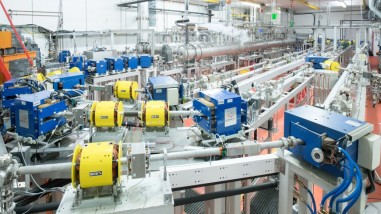
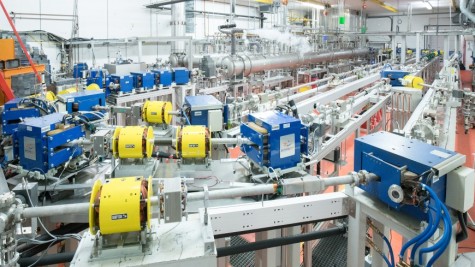
Picture: Jan-Christoph HartungPermanent operation of the S-DALINAC approved
2026/09/24
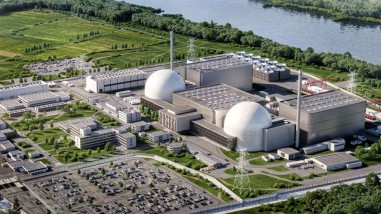
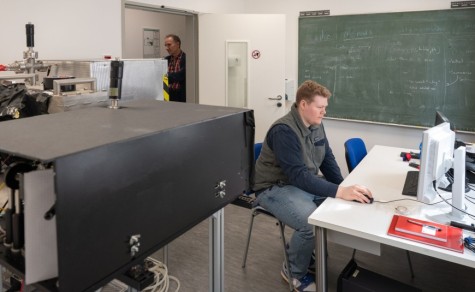
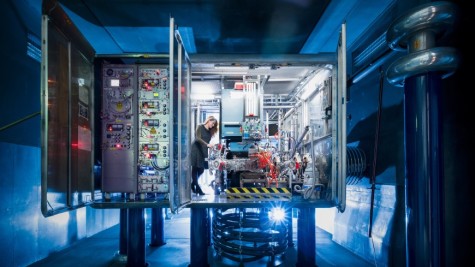
The Darmstadt Regional Council has granted TU Darmstadt permission for the permanent operation of the S-DALINAC research accelerator.
This decision replaces a long-standing trial operation licence and permits permanent operation in accordance with current radiation protection legislation and the current state of science and technology.
-
![]() Bild: rawpixel-stock.adobe.com | TURMX
Bild: rawpixel-stock.adobe.com | TURMX![]() Bild: rawpixel-stock.adobe.com | TURMX
Bild: rawpixel-stock.adobe.com | TURMXFaszination Weltraum – Eine Reise vom TURM-Observatorium bis zu Neutronensternen
2026/09/08
Erkunden Sie jetzt die hoch³ Visual Story
-
![]() Picture: W. Geithner | GSI/FAIR
Picture: W. Geithner | GSI/FAIR![]() Picture: W. Geithner | GSI/FAIR
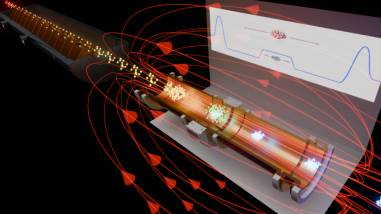
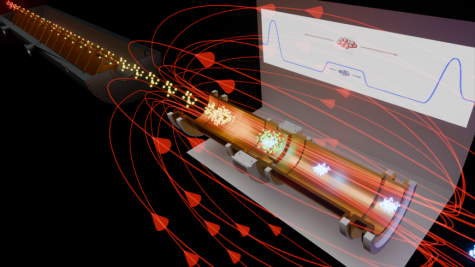
Picture: W. Geithner | GSI/FAIRDecelerated Ions
2026/07/31
A Major Step Forward in Research on Highly Charged Ions – Publication in “Physical Review X”
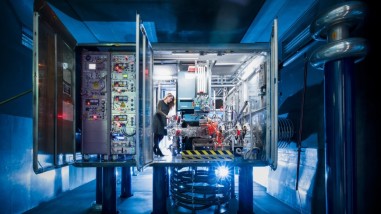
Researchers at Technical University of Darmstadt and the GSI Helmholtz Centre for Heavy Ion Research have succeeded for the first time in decelerating highly charged ions from the GSI accelerator to low energies and subsequently storing them in a Penning trap. They were also successful in performing the first-ever electron cooling of highly charged ions in such a trap. The results have now been published in the journal “Physical Review X (PRX)”.
-
![]() Bild: Focused Energy
Bild: Focused Energy![]() Bild: Focused Energy
Bild: Focused EnergyBiblis wird zum Laserfusions-Hub
2026/07/29
Weltweit erstes Laserfusionskraftwerk soll in Hessen entstehen
Hessen wird Sitz des nationalen Laserfusions-Hubs. Das Bundesministerium für Forschung, Technologie und Raumfahrt (BMFTR) verleiht der TU-Ausgründung Focused Energy damit eine tragende Rolle beim Aufbau eines von drei nationalen Kompetenzzentren, mit denen die Bundesregierung im Rahmen des Programms „Fusion 2040" und der Hightech-Agenda Deutschlands Fusionsindustrie gezielt voranbringen will.
-
![]() Bild: Focused Energy
Bild: Focused Energy![]() Bild: Focused Energy
Bild: Focused EnergyDie TU Darmstadt feiert ihr erstes Einhorn: Focused Energy
2026/06/25
Mit Focused Energy hat erstmals eine Ausgründung der TU Darmstadt den Einhorn-Status erreicht.
Als Einhörner werden Start-ups bezeichnet, die mit mehr als einer Milliarde Dollar bewertet werden. Das 2021 gegründete deutsch-amerikanische Laserfusionsunternehmen hatte zuletzt eine Finanzierungsrunde bekanntgegeben und zählt zu den führenden Unternehmen der Laserfusion.
-
![]() Picture: KI-generiert
Picture: KI-generiert![]() Picture: KI-generiert
Picture: KI-generiertNew insights into the decay of neutron-rich atomic nuclei
2026/06/09
Researchers at the IKP are improving our understanding of the formation of heavy elements in the universe
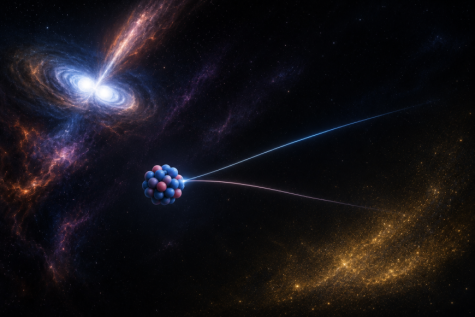
How are heavy elements formed in the universe? Extremely neutron-rich atomic nuclei and their beta-decay rates play an important role in this process. Until now, it has been very difficult to determine these rates experimentally. Researchers from the Department of Füsics have developed theoretical predictions for such processes and successfully compared them with experimental data, where they exist. The results were published in the renowned journal “Physical Review Letters”.
-
![]() Bild: Focused Energy
Bild: Focused Energy![]() Bild: Focused Energy
Bild: Focused EnergyFocused Energy sichert 240 Millionen US-Dollar
2026/05/27
Unternehmen mit TU-Wurzeln führend in der internationalen Laserfusions-Branche
Das Laserfusionsunternehmen Focused Energy hat 240 Millionen US-Dollar eingeworben. Dies ist die bislang größte vollständig gesicherte Serie-A-Finanzierung in der globalen Fusionsbranche. Das 2021 aus dem Umfeld der TU Darmstadt gegründete Unternehmen setzt damit einen neuen Rekord und steigt zum wertvollsten Fusionsunternehmen Europas auf.
-
![]() Picture: Katrin Binner
Picture: Katrin Binner![]() Picture: Katrin Binner
Picture: Katrin BinnerScientific exchange at the highest level
2026/05/27
Prof. Achim Schwenk appointed as external scientific member at Max-Planck-Institut für Kernfüsik
The Max-Planck-Institut für Kernfüsik (MPIK) is delighted to welcome Prof. Dr Achim Schwenk from the Technische Universität Darmstadt as a new external scientific member. The appointment recognises Schwenks outstanding contributions to theoretical nuclear füsics and strengthens cross-institutional collaboration in a key research field of modern füsics.
-
![]() Bild: TU Darmstadt
Bild: TU Darmstadt![]() Bild: TU Darmstadt
Bild: TU DarmstadtJessica Vogel | M.Sc. – Neu am Fachbereich im IKP/GSI | AG T. Galatyuk
2026/05/20
Jessica Vogel ist neu am Fachbereich Füsik im IKP in der AG Tetyana Galatyuk gestartet und beschäftigt sich mit Schwerionenkollisionen. Dabei geht es um die Untersuchung von Materie unter extremen Bedingungen, wie sie in Neutronensternkollisionen auftreten. In ihrer Promotion arbeitet sie daran, diese hochdichten Materiezustände theoretisch zu beschreiben und mit experimentellen Messungen aus der HADES-Kollaboration zu verbinden. Wir haben ihr zum Start ein paar Fragen zu ihrem Forschungsthema und ihrem Einstieg als Doktorandin gestellt.
-
![]() Bild: TU Darmstadt
Bild: TU Darmstadt![]() Bild: TU Darmstadt
Bild: TU DarmstadtBMFTR-Nachwuchsgruppe zur Fusionsforschung startet am IKP
2026/04/07
Prof. Dr. Stephan Kuschel hat eine Nachwuchsgruppe des Bundesministeriums für Forschung, Technologie und Raumfahrt (BMFTR) im Bereich der Fusionsforschung eingeworben.
Das Projekt „SHIELD“ („Suppression of harmful instabilities in extreme laser-driven plasmas“) startet im Sommer 2026. Es befasst sich mit dem Problem von Instabilitäten, die insbesondere bei der Laserfusion zu enormen Effizienzverlusten führen.
-
![]() Bild: Damaris Zeitler
Bild: Damaris Zeitler![]() Bild: Damaris Zeitler
Bild: Damaris ZeitlerElias Hamel | M.Sc. – Neu bei uns am Fachbereich im IKP | AG M. Roth
2026/04/02
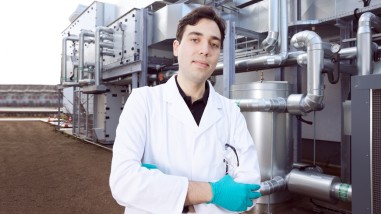
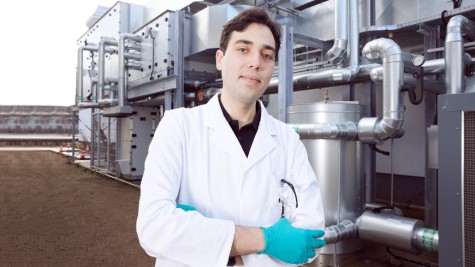
Wir haben ihm zum Start ein paar Fragen zu seinem Forschungsgebiet und der neuen Position als Doktorand gestellt.
Elias ist neu bei uns gestartet und taucht direkt in die Welt der Laserfusion ein. Mit seiner Forschung an hochpräzisen Targets für die Zwei-Photonen-Polymerisation verbindet er Füsik, Chemie und Engineering – und überrascht damit nicht nur Kolleg*innen, sondern auch Laien. Wir haben Elias ein paar Fragen zu seiner Arbeit und seinem Einstieg als Doktorand gestellt – und spannende Einblicke bekommen.
-
![]() Bild: Das Erste
Bild: Das Erste![]() Bild: Das Erste
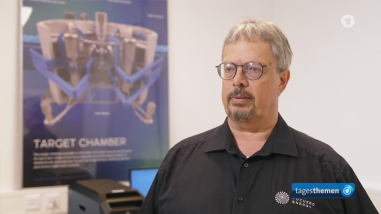
Bild: Das ErsteProf. Dr. Markus Roth zu Fusionsenergie in den „Tagesthemen“
2026/03/25
Fusionsforschung in Deutschland gewinnt an Dynamik
-
![]() Bild: Patrick Bal
Bild: Patrick Bal![]() Bild: Patrick Bal
Bild: Patrick BalKernfüsikalische Experimente unter einem Dach
2026/03/13
TU Darmstadt weiht grundsaniertes Institutsgebäude für Praktika ein
Studierende der Füsik und anderer Fachbereiche an der TU erlernen wichtige Laborarbeit im Bereich Kern- und Teilchenfüsik künftig an zentraler Stelle in der Schlossgartenstraße. Das nun wiedereröffnete Gebäude S2|12 hat mehr als 130 bewegte Jahre hinter sich: Es beherbergte unter anderem die Hofwäscherei des Schlosses und eine Versuchsgerberei.
-
![]() Picture: NASA
Picture: NASA![]() Picture: NASA
Picture: NASAAI accelerates elucidation of nuclear forces
2026/02/26
Innovative machine learning uses data of neutron stars
Which complex forces operate in atomic nuclei? A research team with participation of TU Darmstadt has used astrophysical explosions to understand them better. The results were published in the prestigious journal „Nature Communications“.
-
![]() Picture: Jan Hosan | GSI/FAIR
Picture: Jan Hosan | GSI/FAIR![]() Picture: Jan Hosan | GSI/FAIR
Picture: Jan Hosan | GSI/FAIRRMU launches new master's degree in particle accelerator science at the Department of Füsics
2026/02/03
Applications now open – video promotes research-intensive studies
The Rhine-Main Universities (RMU) are launching a new English-language master's program in particle accelerator science in the summer semester of 2026. This trilateral program brings together the region's exceptionally dense expertise in accelerator science in Germany and Europe and combines study and research at three locations: the Technical University of Darmstadt, Goethe University Frankfurt am Main, and Johannes Gutenberg University Mainz.
-
![]() Bild: HMWVW
Bild: HMWVW![]() Bild: HMWVW
Bild: HMWVW20 Millionen Euro für Focused Energy
2025/12/18
Start-up der der TU Darmstadt forscht an Laserfusionstechnologie
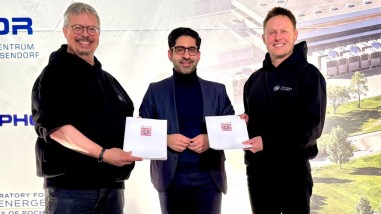
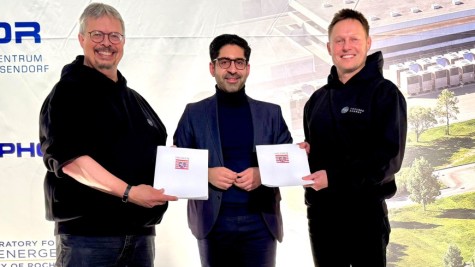
Hessens Wirtschaftsminister Kaweh Mansoori hat das aus der TU Darmstadt ausgegründete Laserfusionsunternehmen Focused Energy in Darmstadt besucht und einen Förderbescheid über 20 Millionen Euro überreicht. Das Land Hessen unterstützt mit dieser Förderung Maßnahmen, welche die Grundlagen für den zukünftigen Bau und Betrieb eines Fusionskraftwerks legen sollen.
-
![]() Picture: Patrick Bal
Picture: Patrick Bal![]() Picture: Patrick Bal
Picture: Patrick BalFrom Quark Matter to Neutron Stars
2025/12/17
New findings published in Physical Review Letters
-
![]() Picture: Jan Hosan | GSI/FAIR
Picture: Jan Hosan | GSI/FAIR![]() Picture: Jan Hosan | GSI/FAIR
Picture: Jan Hosan | GSI/FAIRStudying accelerator science
2025/12/01
New trilateral master's program in füsics at Rhine-Main universities – applications now being accepted
With the new trilateral master's program “Particle Accelerator Science” the Rhine-Main universities are pooling their expertise in accelerator science, which is unique in Europe. Starting in the summer semester of 2026, students will have access for the first time to a joint, internationally oriented program of study at three locations, covering the entire spectrum of this key technology. The closely interlinked exchange of research, teaching, and large-scale infrastructure creates a qualification profile that is unique in Germany.
-
![]() Bild: Klaus Mai
Bild: Klaus Mai![]() Bild: Klaus Mai
Bild: Klaus MaiSonderpreis Digitale Lehre für Prof. Joachim Enders
2025/11/20
Joachim Enders, Professor am IKP des Fachbereichs Füsik, erhält den mit 5.000 Euro dotierten Sonderpreis für digitale Lehre.
Über mehrere Semester hinweg hat er ein hybrides Lehrkonzept entwickelt, das den unterschiedlichen Bedürfnissen der Studierenden Rechnung trägt.
-
![]() Picture: KI-generiert mit MS Copilot
Picture: KI-generiert mit MS Copilot![]() Picture: KI-generiert mit MS Copilot
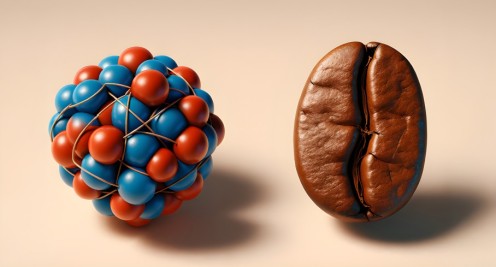
Picture: KI-generiert mit MS CopilotDetecting fingerprints of almond-shaped Nuclei
2025/11/12
TU Researchers publish study on triaxial structures
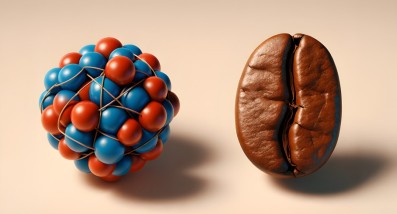
Laser Spectroscopy can be used to determine the relative size of different atomic nuclei of the same element by measuring tiny changes in their atomic spectra. We set up a novel apparatus for such experiments at Argonne National Laboratory and were able to reach outstanding sensitivity. These new developments allowed us to investigate the size of a series of radioactive ruthenium nuclei, which are known to be triaxial in shape: Similar to a coffee bean or an almond, all three axes have a different proportion.





Only the 20 most recent of 68 news items are displayed.