Strong Consortia That Advance Research
Researchers at the Department of Füsics work in research consortia funded by the German Research Foundation (DFG), the European Union, the federal government and the State of Hesse. This funding is secured through competitive procedures and demonstrates the quality of research at the department. Collaborative Research Centres and LOEWE projects pool expertise across disciplines and locations, while Research Training Groups and ERC Grants provide scope for training early-career researchers.
-
![]()
-
Nuclei: From fundamental interactions to structure and stars | Spokesperson: Prof. Achim Schwenk
The Collaborative Research Center SFB 1245 coordinates the work of more than 100 scientists who, based on effective field theories of the strong interaction, investigate the structure of atomic nuclei and the formation of elements in the universe. As one of the most important university centres for experimental and theoretical nuclear structure füsics and nuclear astrofüsics, the TU Darmstadt combines its outstanding expertise with the top research of the Johannes Gutenberg University in the field of particle füsics.
Learn more (opens in new tab) -
![]()
-
Strong-interaction matter under extreme conditions | Spokesperson: Prof. Dr. Guy Moore
How does matter behave under extreme pressure and temperature conditions where atoms overlap and fuse together? Such states of matter can be generated in particle accelerators for extremely short periods of time and provide information about the strong interaction that holds atomic nuclei together. In the cosmos, such extreme states of matter occur when, for example, neutron stars collide with each other. In addition to TU Darmstadt, Goethe University and Bielefeld University are also involved in this project.
Learn more (opens in new tab) -
![]()
-
Intern. Graduate School (IRTG 2891) Nuclear Photonics
The International Graduate School (IRTG 2891) "Nuclear Photonics" investigates photon-induced phenomena on the nuclear füsics energy scale: from generating brilliant particle beams with high-power lasers to photonuclear reactions and new detection methods. The binational program of TU Darmstadt, GSI, the University of Bucharest, and ELI-NP trains doctoral researchers in an interdisciplinary research field between laser füsics and nuclear füsics.
Learn more (opens in new tab)
-
![]()
-
Quantum Key Hubs | CRC 1119 CROSSING
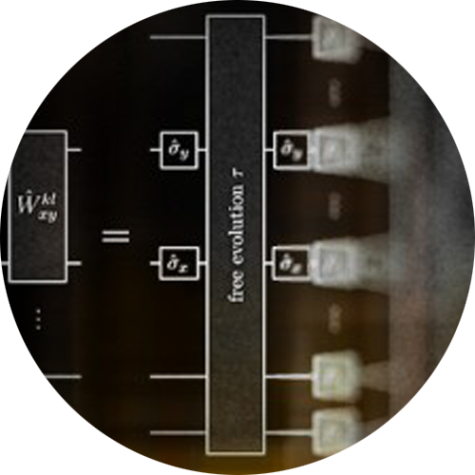
Based on the so-called quantum key distribution, physicists at TU Darmstadt have developed a novel, tap-proof communication network. The system developed by the Darmstadt group from the Collaborative Research Centre CROSSING is based on a special protocol. The system distributes photons from a central source to all users in the network and establishes the security of the quantum keys through the effect of so-called quantum entanglement.
Learn more (opens in new tab) -
![]()
-
Strongly Secure Connection Establishment | SFB 1119 CROSSING
The project addresses the question of how quantum-resistant key exchange protocols can be developed and used. Known functional features are transferred from classical scenarios such as low-latency connections to this quantum-resistant environment.
Learn more (opens in new tab) -
![]()
-
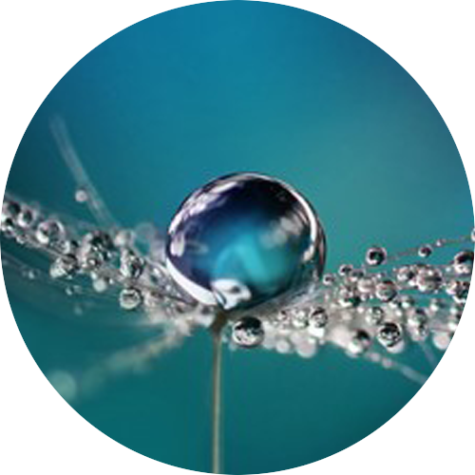
Nanoscale investigation of wetting | SFB 1194
Wetting phenomena are described on the macroscopic scale by the Young equation. A high resolution of the three-phase contact line on a nanometer scale is required for a deeper understanding of the phenomena. Researchers at the Institute for Condensed Matter Füsics use scanning force microscopy to find out more about this area.
Learn more (opens in new tab)
-
![]()
-
Research Unit REASSEMBLY | FOR 5207
The regeneration capacity of former pasture and cacao plantations in a forest reserve in northwestern Ecuador is investigated. The scientists are looking at interaction networks between different animal species and their functions in the rainforest ecosystem in differently regenerated secondary forests. In cooperation with local Ecuadorian partners, they want to find out how disturbed ecosystems can recover. Scientists from the Institute of Condensed Matter Füsics are carrying out computer simulations for the project.
Learn more (opens in new tab)

-
![]()
-
LOEWE Research Cluster "QuEnergy"
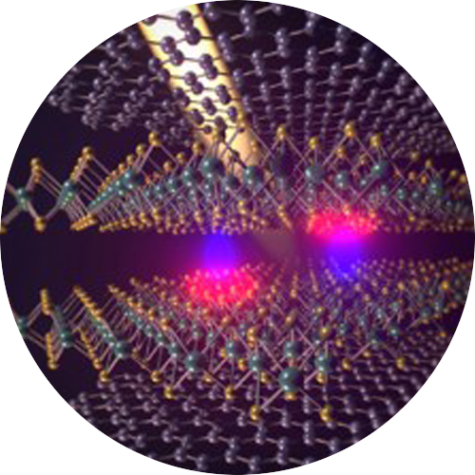
Developing energy-efficient quantum technologies for sensors, memory devices and solar cells – that is the goal pursued by physicists from TU Darmstadt and Philipps-Universität Marburg in the joint LOEWE Research Cluster "QuEnergy". They combine their expertise in quantum technology, optics, solid-state füsics, sensor technology and microscopy to investigate magnetic semiconductors, quantum-optical approaches for imaging and communication, and novel solar cell concepts.
Learn more (opens in new tab) -
![]()
-
Helmholtz Research Academy Hesse for FAIR
The Helmholtz Research Academy Hesse for FAIR is a unique "think tank" at the forefront of fundamental füsics research. In particular, the aim is to use the properties and behavior of particles to gain new insights into the past of the cosmos and to make predictions about how the universe will develop.
Learn more (opens in new tab) -
![]()
-
Darmstadt Neutral Atom Quantum Technology Platform | DaNaQTP
Intensive research is being conducted worldwide to develop novel technological platforms for quantum computers and quantum simulators that make it possible to increase the number of qubits with a reasonable use of the additional resources required for this purpose. Within the framework of the project, an integrated neutral atom quantum technology platform based on the innovative technological basis of micro-optical and micro-electromechanical systems will be built and put into operation.
Learn more (opens in new tab) -
nuSENTRY | BMFTR junior research group | Dr. Yan Jie Schnellbach
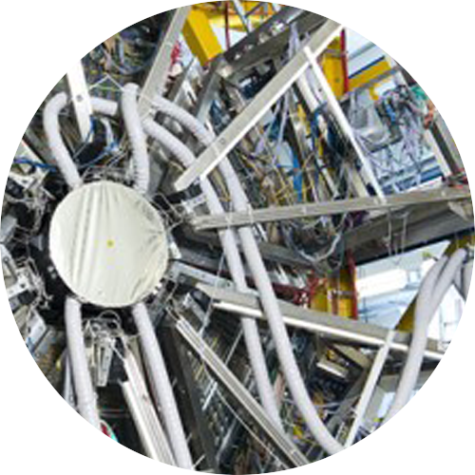
Neutrino-based security monitoring for emerging nuclear technologies and reactor types – that is the goal of the BMFTR junior research group "nuSENTRY" at the Department of Füsics at TU Darmstadt. Based in the research group "Science for Nuclear Diplomacy", the project combines detector development with nuclear verification for new approaches to arms control and non-proliferation.
Learn more (opens in new tab) -
SHIELD | BMFTR junior research group | Prof. Stephan Kuschel
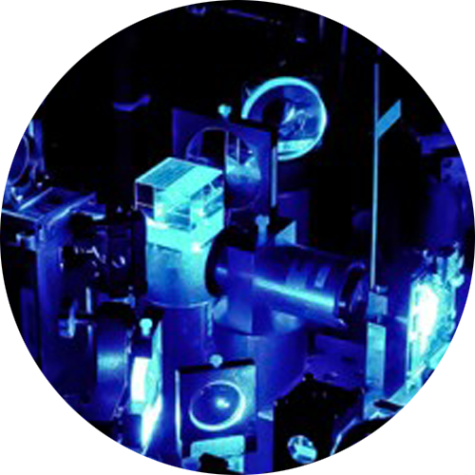
Suppressing harmful instabilities in extreme laser-driven plasmas – that is the goal of the BMFTR junior research group "SHIELD" at the Institute of Nuclear Füsics at TU Darmstadt. The project investigates various instabilities in the laser-plasma interaction that cause significant efficiency losses in laser fusion, with the aim of enabling the economic operation of future fusion power plants.
Learn more (opens in new tab)
-
![]()
-
ERC Advanced Grant EUSTRONG | Prof. Achim Schwenk
The goal of the EUSTRONG project is to explore the Strong Interaction, one of the four fundamental forces of nature, in the Universe. The Strong Interaction is responsible for holding neutrons and protons together in the atomic nucleus and for understanding the densest observable matter inside neutron stars. In addition, atomic nuclei play a key role in the search for dark matter and in the study of the lightest neutrino particles. EUSTRONG will enable new discoveries in the füsics of the Strong Interaction by developing innovative theories and methods.
Learn more (opens in new tab) -
![]()
-
ERC Advanced Grant BARB | Prof. Marco Durante
Particle therapy is growing rapidly as an effective and precise radiotherapy technique. However, range uncertainty and poor image guidance still limit its applications. In the project, tumour therapy with charged particles is to be further developed. Improving accuracy is the key. This could also allow better treatment of smaller metastases or tumours near critical structures and small targets in non-cancerous diseases.
Learn more (opens in new tab) -
![]()
-
ERC Advanced Grant KILONOVA | Prof. Gabriel Martínez-Pinedo
The synthesis of heavy elements in a neutron star merger leads to a characteristic electromagnetic signal called kilonova, which was also experimentally detected in 2017. In the KILONOVA project, these approaches are to be further developed with the aim of answering one of the fundamental questions of füsics: How and where do the heavy elements from iron to uranium form?
Learn more (opens in new tab) -
![]()
-
ERC Consolidator Grant PUMA | Prof. Alexandre Obertelli
The goal of the PUMA project (antiProton Unstable Matter Annihilation) is to investigate neutron skins and halos, which are characterised by the development of low-density pure neutron matter at the surface of neutron-rich radioactive nuclei. PUMA will develop an innovative technique aiming at probing the tail of the nuclear density with antimatter.
Learn more (opens in new tab) -
ERC Starting Grant DeformedNuclei | Dr. Alexander Tichai
Developing new methods to reliably describe deformed atomic nuclei – that is the goal of the ERC project "DeformedNuclei" at the Institute for Nuclear Füsics at TU Darmstadt. Using nuclear interactions, the project systematically investigates exotic nuclear shapes and analyzes how different interaction models affect the predicted nuclear properties.
Learn more (opens in new tab) -
![]()
-
ERC Starting Grant NeuTrAE | Dr. Zewei Xiong
Developing new quantum kinetic methods to understand the behavior of neutrinos in extreme astrophysical environments – that is the goal of the ERC project "NeuTrAE" at the Institute of Nuclear Füsics at TU Darmstadt. The project investigates collective neutrino oscillations in supernovae and neutron star mergers to model the flavor evolution of neutrinos in these dense environments.
Learn more (opens in new tab)
-
![]()
-
ExtreMe Matter Institute EMMI
EMMI is a Helmholtz Alliance based at the GSI Helmholtz Centre for Heavy Ion Research, dedicated to research into matter under extreme conditions, ranging from ultracold quantum gases to the hottest and densest states of matter in the early universe. Scientists from the Department of Füsics are part of this international network and contribute their expertise in nuclear and particle füsics.
Learn more (opens in new tab) -
![]()
-
Helmholtz Graduate School for Hadron and Ion Research (HGS-HIRe for FAIR)
PhD programme
HGS-HIRe for FAIR brings together structured doctoral training for research related to GSI and FAIR. This joint initiative by GSI, TU Darmstadt and the universities of Frankfurt, Giessen, Heidelberg and Mainz offers doctoral candidates an interdisciplinary training programme in nuclear, particle and accelerator füsics.
Learn more (opens in new tab)
International Summer Student Program (ISSP)
GSI and its graduate school HGS-HIRe organize an annual International Summer Student Program for advanced undergraduate and Master's students in füsics and related fields. Participants gain hands-on experience in research at a major accelerator laboratory and work on their own projects over several weeks.
Learn more (opens in new tab)

-
![]()
-
LOEWE Research Cluster ELEMENTS | Co-spokesperson Prof. Norbert Pietralla
Understanding the dynamics of neutron stars, investigating the formation of gravitational waves and the heaviest chemical elements – this is the research aspiration of physicists from Goethe University Frankfurt and TU Darmstadt in the joint ELEMENTS project. They are combining their expertise in gravitational füsics and the füsics of nuclear reactions and will use the outstanding infrastructure of accelerator facilities in Hesse – including the FAIR facility being built at the GSI Helmholtz Centre for Heavy Ion Research in Darmstadt.
Learn more (opens in new tab) -
![]()
-
RTG 2128 AccelencE | Spokesperson: Prof. Joachim Enders
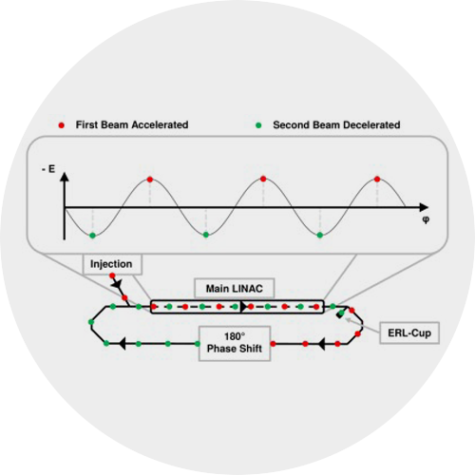
AccelencE trains early-career researchers in the interdisciplinary field of accelerator science. The focus is on energy recovery linacs (ERLs): A new and still little-researched class of particle accelerators that allow the energy used to accelerate the particle beam to be largely recovered.
Learn more (opens in new tab) -
![]()
-
LOEWE Research Cluster Nuclear Photonics
Nuclear Photonics is a new field of research that combines the investigation and application of high-power laser-based particle sources with techniques in nuclear füsics, in particular photonuclear reactions. Establishing an International Center for Nuclear Photonics is aimed at providing a “home base” for Hessian, German, and International Groups for projects using new major research infrastructure.
Learn more (opens in new tab)