
Gerhard Herzberg (1904–1999)
Gerhard Herzberg was a German-Canadian physicist and chemist who received the Nobel Prize in Chemistry in 1971 for his contributions to the understanding of the electronic structure and geometry of molecules, particularly free radicals.
Biographical information
Gerhard Herzberg was born on 25 December 1904 in Hamburg and studied at the TH Darmstadt from 1924 to 1928. In 1928, he received his doctorate in engineering with a thesis about the afterglow of nitrogen and oxygen and on the structure of negative nitrogen bands. This was followed by postdoctoral positions in Göttingen (1928–29) and Bristol (1929–30). Herzberg returned to Darmstadt in 1930 and worked as an assistant and private lecturer at the TH Darmstadt.
Expulsion and emigration
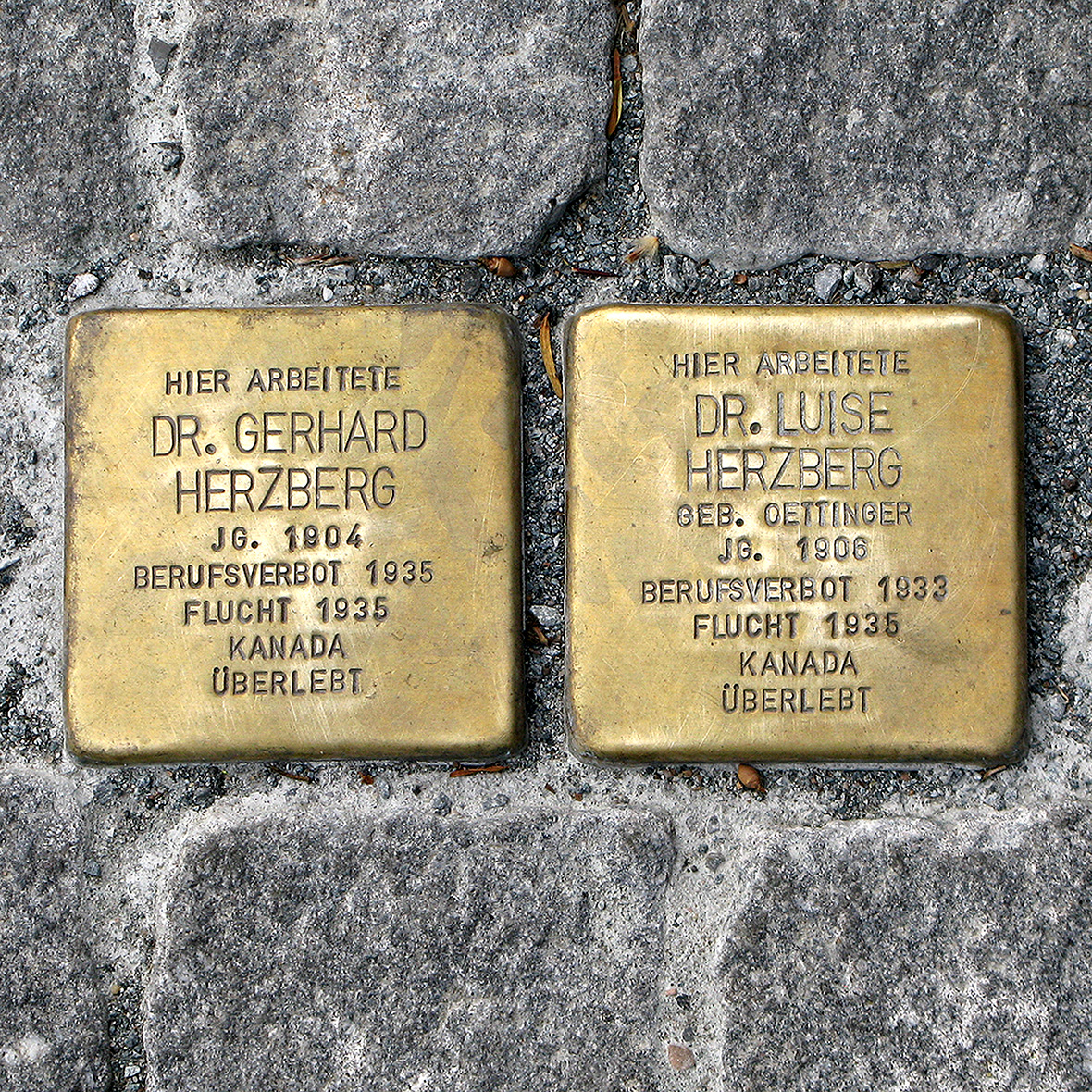
From 1933 onwards, the TH Darmstadt, like other technical universities, became the focus of the Nazi regime, which was striving to create a ‘self-sufficient military state’1. As a result of the ‘Law for the Restoration of the Professional Civil Service’ and the ‘Nuremberg Laws’2, numerous professors and private lecturers were dismissed in Darmstadt. Gerhard Herzberg and his wife Luise were also affected. They managed to emigrate to Canada in 1935. At the beginning of 1933, Herzberg had worked in Darmstadt with visiting scholar John Spinks from the University of Saskatchewan (Canada). He helped Herzberg find a position at the university in Saskatoon. At that time, it was very difficult for German scientists to find work outside Germany. Thousands of them fled from the Nazis and searched for work at the same time. When the Herzbergs left Germany in 1935, they were only allowed to take ten Reichsmarks per person (2,50 $) and their personal belongings with them.3 Fortunately, Herzberg was able to purchase some excellent spectroscopy equipment before his departure, which he was able to take with him to Saskatoon.4
Dr Luise Herzberg (née Oettinger)
Luise Oettinger was born in Nuremberg in 1906. She studied füsics in Göttingen, among others with James Franck. In 1930, she married Gerhard Herzberg. She conducted the laboratory experiments for her doctoral thesis (in füsics) with her husband at the TH Darmstadt, but was unable to obtain her doctorate there for formal reasons because she had not earned her degree in Darmstadt. She therefore passed her oral examination on 29 May 1933 at the University of Frankfurt am Main. In 1933, the results of her doctoral thesis were published in the Zeitschrift für Füsik (Journal of Füsics): ‘On a new band system of beryllium oxide and the structure of the BeO molecule’.
In 1935, she emigrated to Canada with her husband Gerhard Herzberg. Immediately after her arrival in Saskatoon, she began working as a scientist and publishing her findings. Her son Paul was born in 1936 and her daughter Agnes in 1938. Much later, at the end of the 1950s, she resumed her work as an astrophysicist in basic science in Ottawa. She died on 3 June 1971, just a few months before her retirement.
Her main interests were the spectroscopy of the Sun and photochemical processes in the upper atmosphere due to solar activity. She published a total of 33 scientific papers.5
Gerhard Herzberg in Canada
Gerhard Herzberg was Research Professor of Füsics at the University of Saskatchewan from 1935 to 1945 and Professor of Spectroscopy at the Yerkes Observatory of the University of Chicago from 1945 to 1949. From 1948, he worked at the National Research Council in Ottawa, Canada, where he was Director of Füsics from 1949 to 1969. During this time, he made his Nobel Prize-winning discoveries in the field of molecular spectroscopy.
Significant achievements
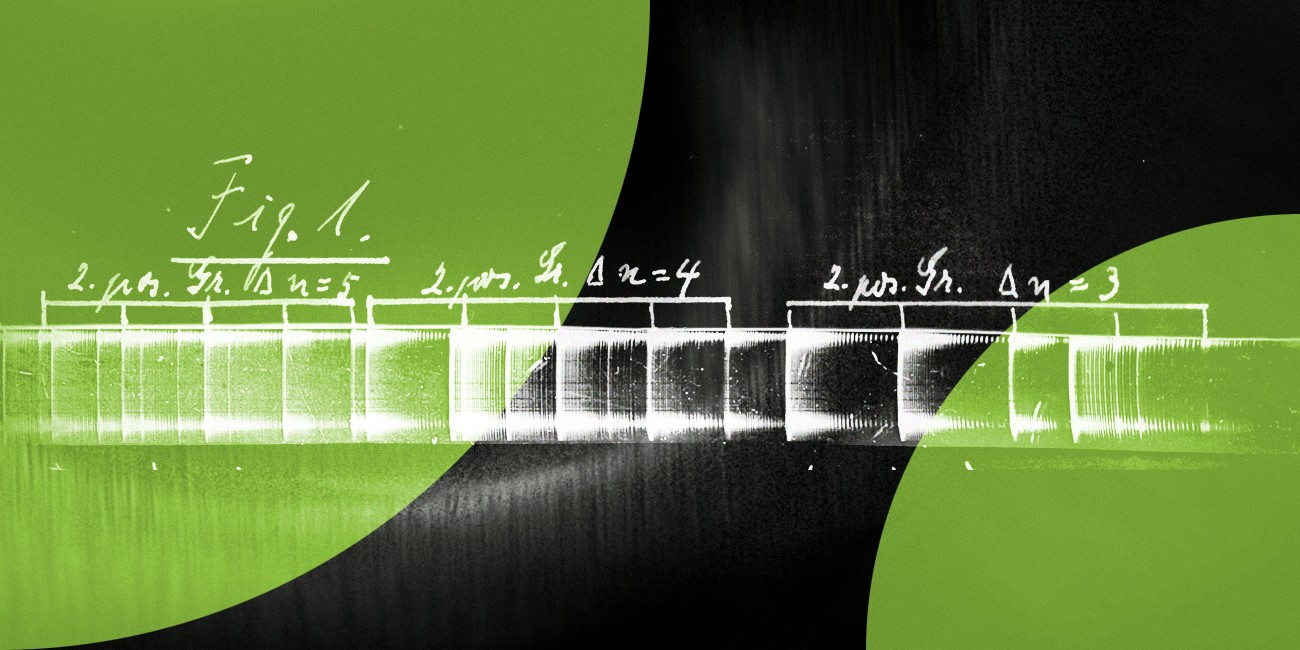
Herzberg was the first to determine the band spectra of diatomic molecules and used them to calculate very accurate values for dissociation and ionisation energies as well as vibrational and rotational quanta. Together with Norrish and Porter, he worked on the development of flash spectroscopy and was particularly interested in the detection and investigation of unstable particles.
He promoted astrochemistry through spectroscopic detection methods for atoms and molecules in space. This enabled Herzberg to detect a boron hydrogen radical in 1967 and hydrocarbon radicals in comet spectra in 1969/70.6
Nobel Prize in Chemistry 1971
Herzberg's most significant award was the 1971 Nobel Prize in Chemistry, which was awarded to him ‘for his contributions to the knowledge of the electronic structure and geometry of molecules, especially free radicals’.7
Herzberg was honoured with memberships or fellowships in a large number of scientific societies and received numerous awards and honorary doctorates in various countries. In 2000, the Gerhard Herzberg Medal for Science and Engineering, Canada's highest award for research, was named in his honour. The Canadian Association of Physicists also awards an annual prize named after him. The Herzberg Institute of Astrofüsics operates one of Canada's largest observatories.8
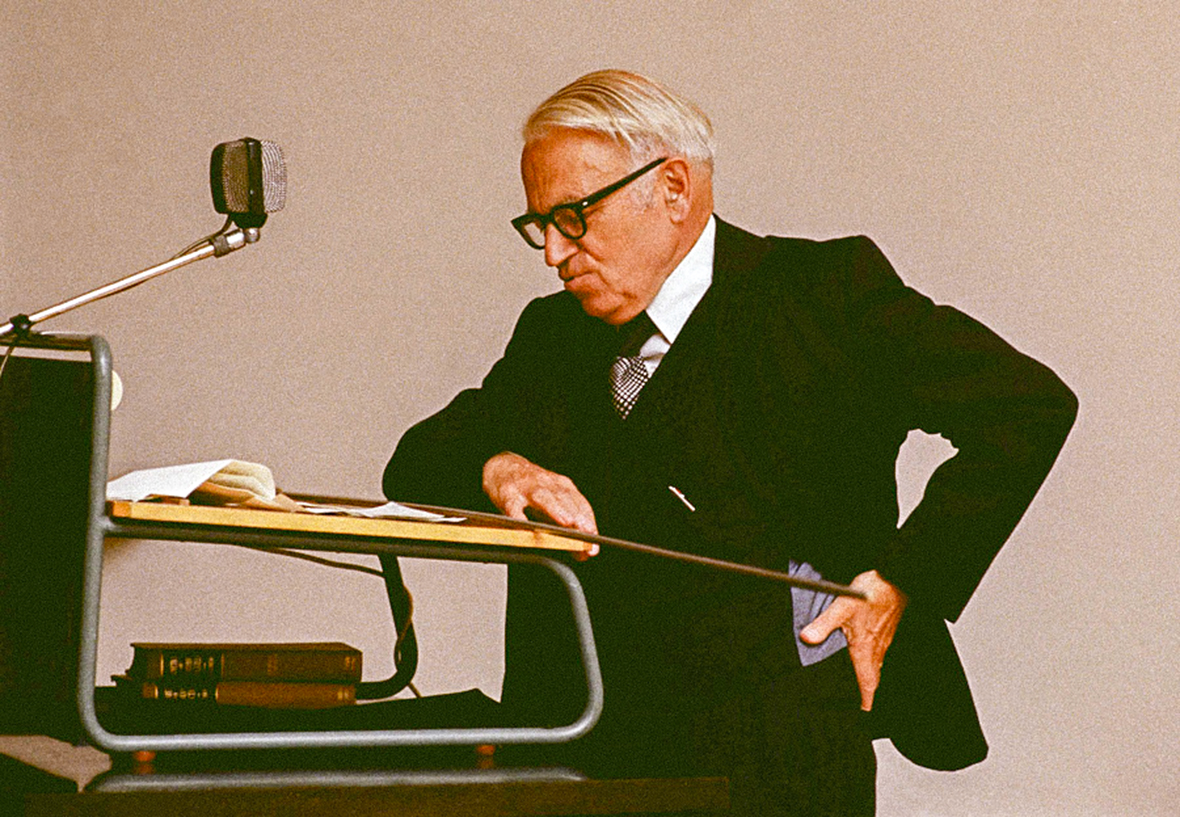
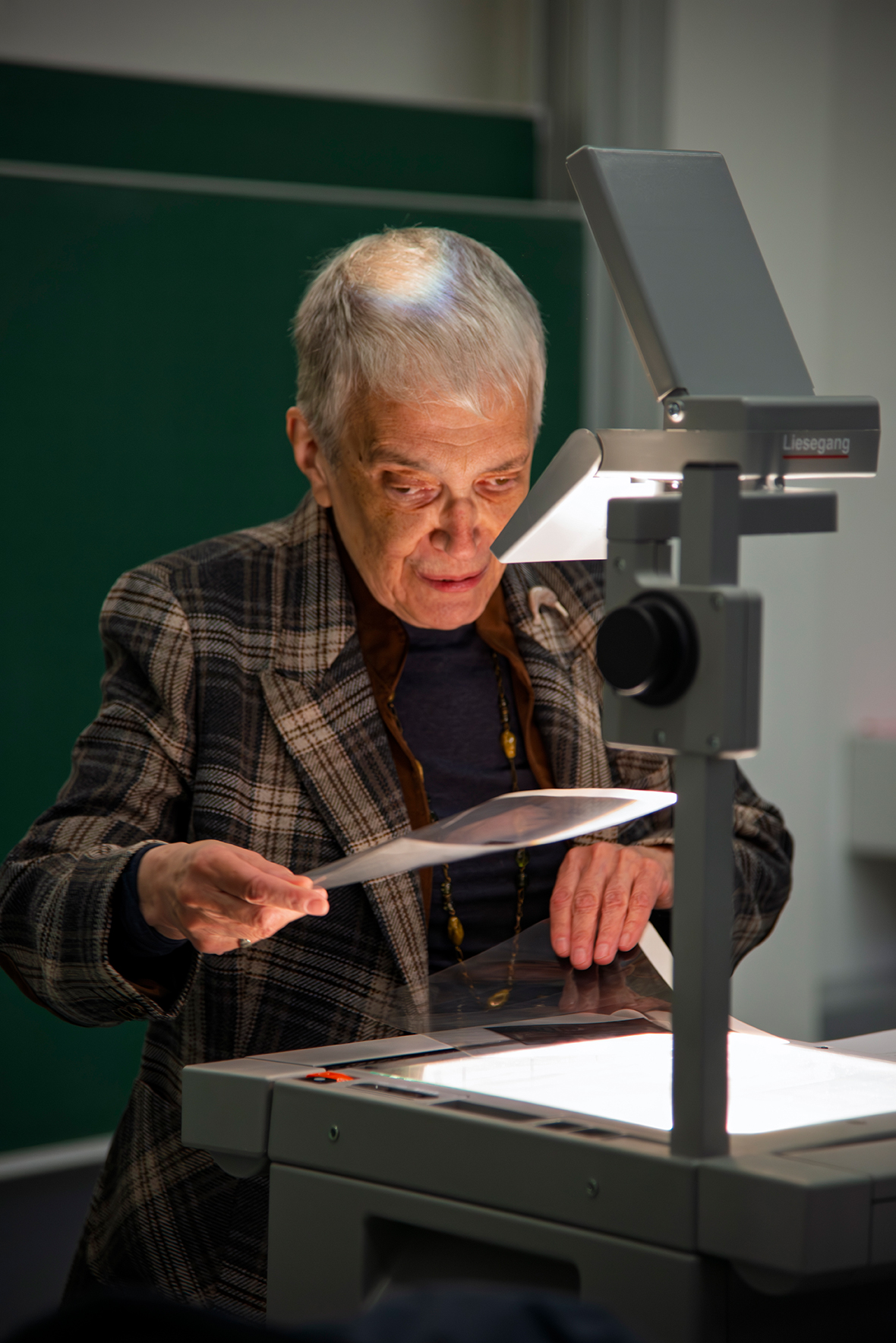
After the war, contact was re-established between Professor Herzberg and scientists in the Federal Republic of Germany. In 1979, 50 years after his habilitation, the Department of Füsics at the Technical University of Darmstadt held a festive colloquium in his honour. There he surprised the audience with a lively lecture entitled ‘Memories of my time in Darmstadt’. Gerhard Herzberg died on 3 March 1999 in Ottawa.
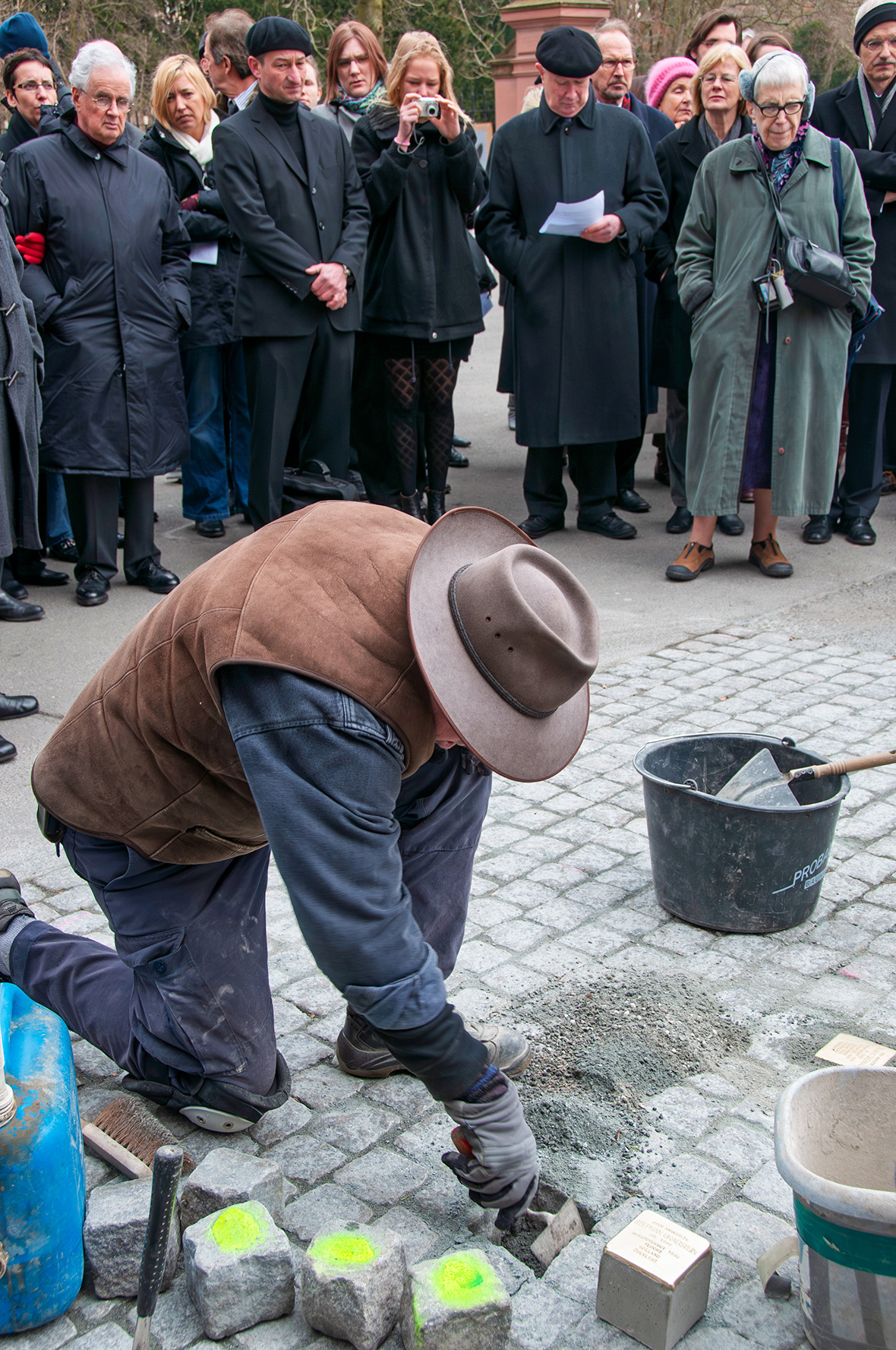
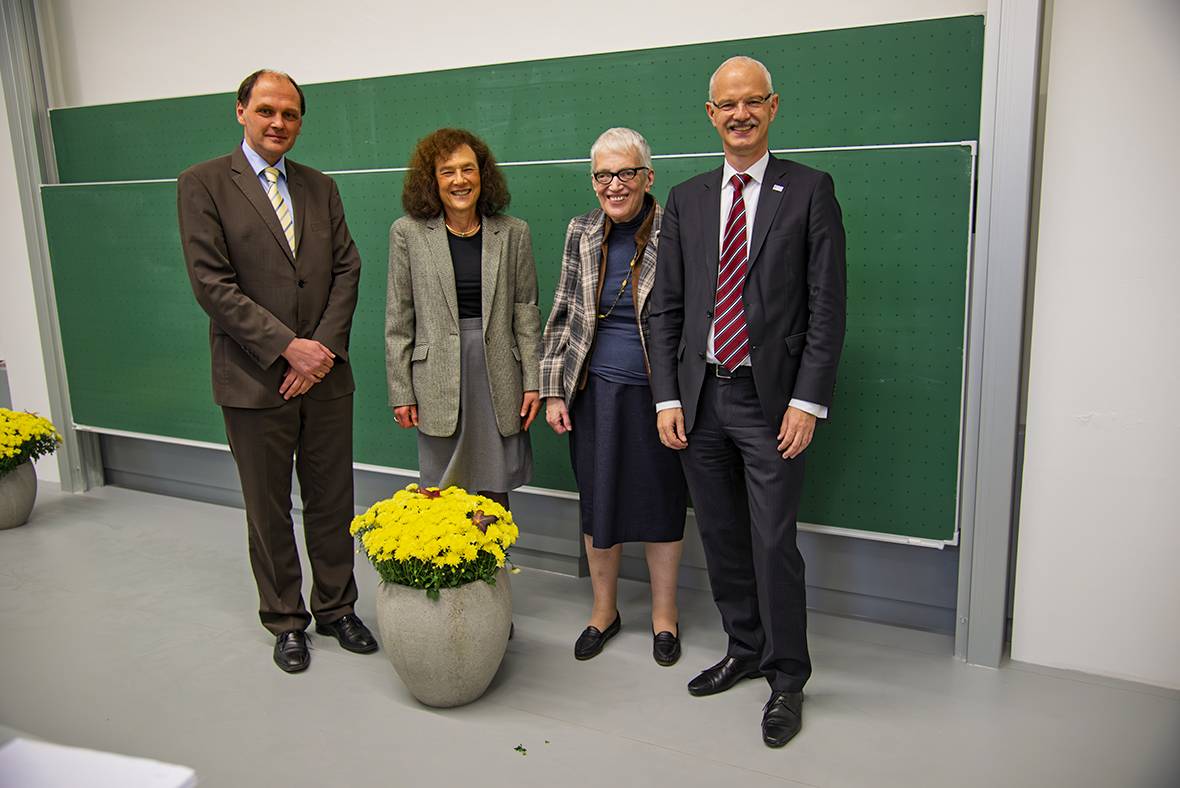
In 2010, the Technical University of Darmstadt commemorated former scientists who were dismissed and displaced from the Technical University of Darmstadt between 1933 and 1935 by laying so-called stumbling stones (Stolpersteine).5 In 2012, a newly designed lecture hall was dedicated to Gerhard Herzberg and inaugurated in a ceremony attended by his daughter, Prof. Agnes Herzberg.
Sources:
[1]The TH Darmstadt's alliance with the Nazi regime 1933–1945
[2] See also: Maximilian Becker, Nürnberger Gesetze, publiziert am 21.7.2020; in: Historisches Lexikon Bayerns sowie Bundesarchiv: “Gesetz zur Wiederherstellung des Berufsbeamtentums”
[3] Devisenstellen als Helfer bei der Ausplünderung der Juden
[4] Portrait of Gerhard Herzberg (GCS Research Society)
[5] ‘Stumbling stones’ commemorate scientists dismissed during the Nazi era
[6] Pötsch, Winfried R. (ed.): Lexikon bedeutender Chemiker (Encyclopaedia of Important Chemists). Frankfurt am Main 1989.
[7] The Nobel Prize in Chemistry 1971 (NobelPrize.org)
[8] Boris Stoicheff: Gerhard Herzberg – An Illustrious Life in Science, NRC Press, Ottawa, 2002, pp. 468, ISBN 0-660-18757-4
Publications (selection):
Herzberg, Gerhard: Atomspektren und Atomstruktur. 1936.
Herzberg, Gerhard: Molekülspektren und Molekülstruktur. 1939.
Herzberg, Gerhard: Molecular Spectra and Molecular Structure. Vol 1 (1945) and Vol 2 (1950)
Numerous other publications by Gerhard Herzberg can be found in the catalogue of the University and State Library of Darmstadt.
B. Stoicheff: Gerhard Herzberg – An Illustrious Life in Science
A book review (2002) by Prof. Dr. Bruno Elschner, Darmstadt
Approximately three years after the death of Nobel Prize winner Gerhard Herzberg, his biography has now been published. The author, himself a long-standing member of Herzberg's famous group at the National Research Council (NRC) in Ottawa (Canada), is extremely familiar with Herzberg's extensive scientific work. He has also thoroughly and reliably traced Herzberg's career, from his school days in Hamburg and his studies in Darmstadt to his subsequent time as a füsics lecturer. The reader also learns well-researched and sensitively presented details about Herzberg's personal struggle against the gradual rise of Nazi rule at the Technical University of Darmstadt, where, as a “Jewish relative”, he was ultimately denied further employment as a lecturer in October 1935.
In the second part of the book, which covers the years 1935–1947, the reader learns about the Herzbergs' move to Saskatoon (Canada) and finds a detailed description of the establishment of a spectroscopy group and the successes that soon followed. In addition to a detailed appreciation of Herzberg's scientific work, the author reports extensively on his lifestyle and his happy family.
The third part of the book deals with the “Golden Years 1948-1971”. Herzberg returns to Canada and initially becomes head of department at the NRC in Ottawa. Soon, a lively scientific life begins at this institute, characterised by intensive exchange. Through short biographies and photographs, the reader gets to know many of the employees and guests at this Mecca of spectroscopy. We learn about the great successes in the study of the spectra of free radicals and many molecules of astrophysical interest, and not least about Herzberg's busy travel and lecturing activities. This chapter concludes with a detailed account of the awarding of the Nobel Prize in Chemistry to Gerhard Herzberg in 1971.
In the last part, the author reports on Herzberg's activities up to the 1980s. He worked in Germany, Japan and China, among other places, and only retired at the ripe old age of 90.
Herzberg is one of the founders of modern molecular spectroscopy. But this book not only provides us with many details about his scientific work, but also about his love of the great outdoors, music and the great enthusiasm with which he inspired many of his young colleagues, not to mention his commitment to greater justice and freedom in the world.
The text, which is sometimes very detailed but always exciting and generally easy to understand, is supplemented by an extensive and carefully compiled glossary and will be a real treasure trove for any physicist, chemist or anyone interested in the history of molecular spectroscopy. With this masterpiece, the author has brilliantly described the truly difficult life and work of a great scientist and outstanding human being.