Measuring Magnetic Fields in Orbit: Atom Interferometer in NASA's Cold Atom Lab Serves as Quantum Sensor
2026/07/14
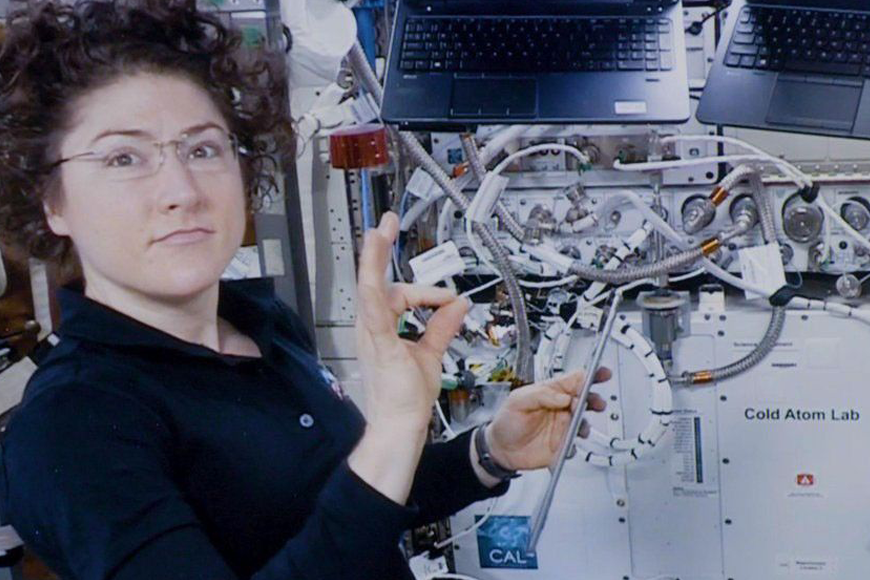
Atom interferometers in space are considered promising tools for high-precision measurements in fundamental füsics, navigation and Earth observation. Their potential, however, depends critically on suppressing disturbances such as vibrations of the carrier platform. An international consortium involving the Theoretical Quantum Optics group led by Professor Enno Giese at the Institute of Applied Füsics at TU Darmstadt has now realized a differential atom interferometer for magnetic field sensing in NASA's Cold Atom Lab (CAL) aboard the International Space Station (ISS). The results have been published in the journal Nature Communications.
- Go to picture 1
- Go to picture 2
- Go to picture 3
- Go to picture 4
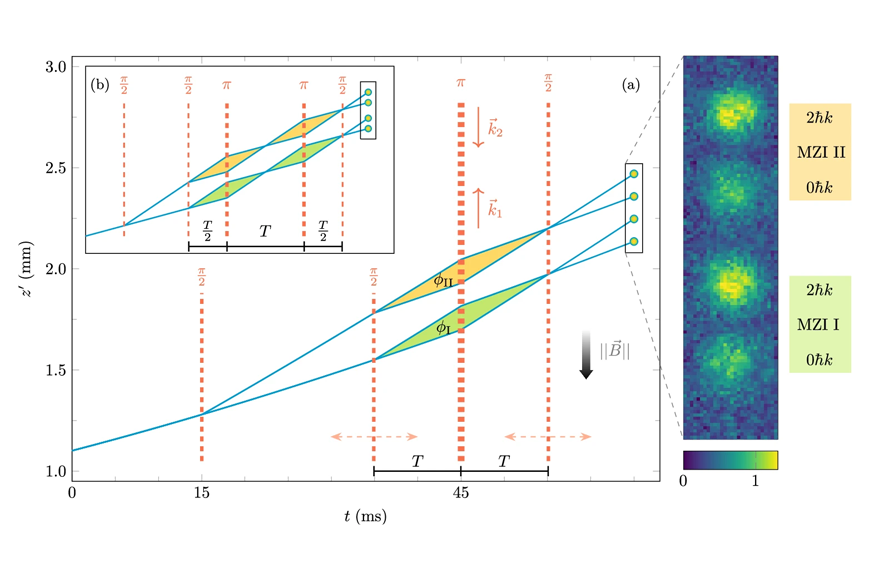
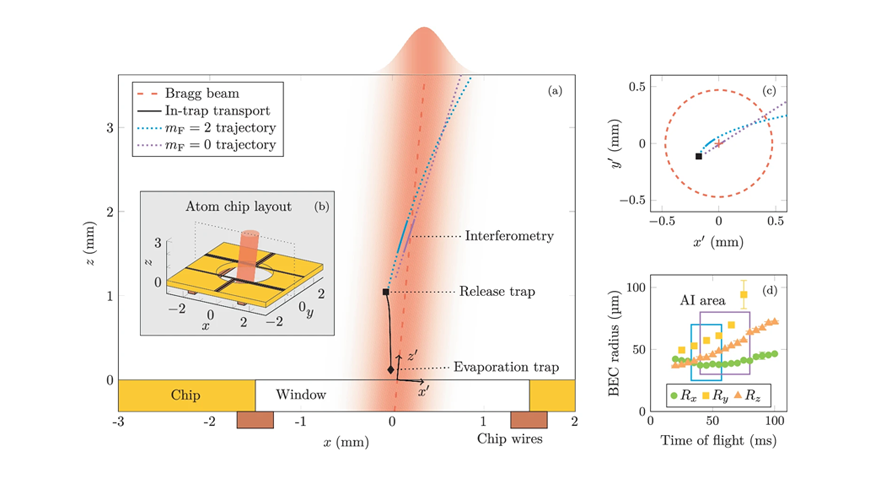
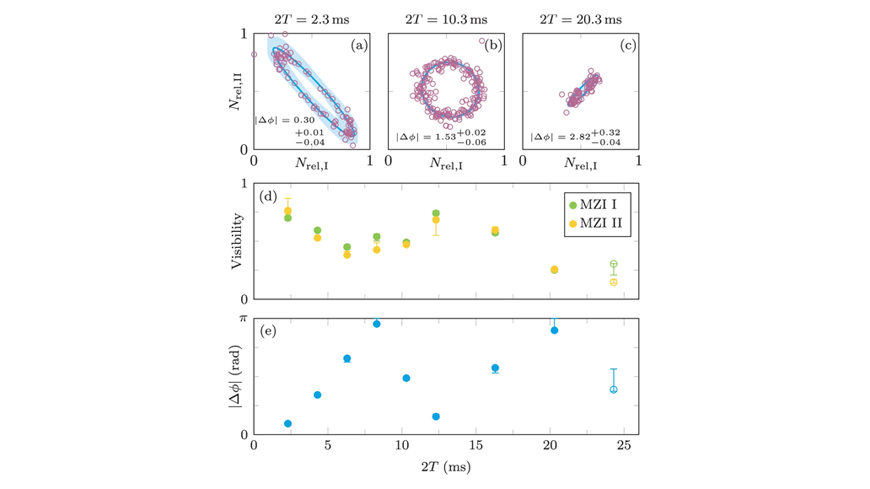
At the heart of the work is a differential interferometry scheme using Bose-Einstein condensed rubidium atoms. By comparing two spatially separated Mach-Zehnder interferometers, common noise sources such as laser phase noise and vibrational noise cancel out, enabling precise measurements even under the challenging vibrational conditions of the ISS. Using such interferometer sequences, the researchers were also able to infer curvatures of the magnetic field. Comparing measurements on magnetically sensitive and magnetically insensitive atomic states further allowed the team to confirm unambiguously that the measured forces are indeed of magnetic origin.
This was made possible through careful characterization of the interferometry laser beam and improved control of the atom source, which significantly extended the interaction time between the atoms and the laser beam. As a result, the experiments achieved interferometer times of up to 40.3 milliseconds, clearly surpassing previous realizations of Bose-Einstein condensate interferometers in space. The team determined the local magnetic field curvature inside the experiment's vacuum chamber to be (614.1 ± 0.3) nanotesla per millimeter squared.
Within the consortium, Professor Giese's group (opens in new tab), which is also involved in other projects funded by the German Aerospace Center, contributed to proposals for the interferometer sequences used and was involved in data anlysis collected aboard the space station.
The results are relevant for future precision measurements with quantum sensors in space: magnetic field gradients are among the leading systematic error sources in atom interferometry experiments, for instance in tests of general relativity. Since only the atoms themselves have access to the interior of the vacuum chamber, in-situ characterization performed directly in space provides important information at the exact measurement location for the design of future missions. Beyond this, the differential approach opens perspectives for multi-modal quantum sensors that could capture both magnetic fields and gravity gradients of the Earth.
Publication
Matthias Meister, Gabriel Müller, Patrick Boegel, Albert Roura, Annie Pichery, David B. Reinhardt, Timothé Estrampes, Jannik Ströhle, Enno Giese, Holger Ahlers, Waldemar Herr, Christian Schubert, Éric Charron, Holger Müller, Jason R. Williams, Ernst M. Rasel, Wolfgang P. Schleich, Naceur Gaaloul, Nicholas P. Bigelow: “Magnetometry with a space-based differential atom interferometer”, in: Nature Communications, Volume 17, Article number 6089, published 11 July 2026
DOI: 10.1038/s41467-026-75230-2 (opens in new tab)