-
![]()
![]()
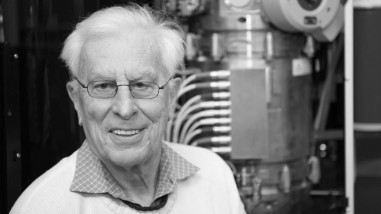
Professor Regine von Klitzing becomes an honorary member of the ACIS scientific society
2026/09/04
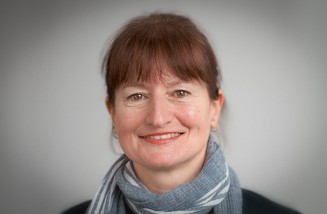
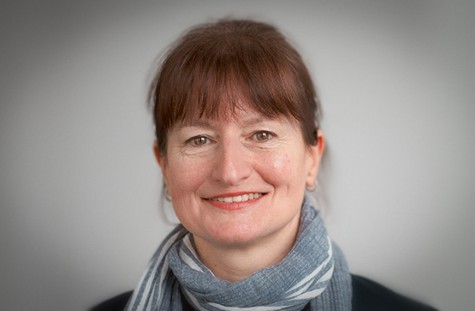
Professor Regine von Klitzing has been appointed as the first honorary member of the Australasian Colloid and Interface Society (ACIS). The honour is a great privilege and means a great deal to her, von Klitzing explained in a message of thanks to the ACIS.
-
![]() Picture: IAP | TU Darmstadt
Picture: IAP | TU Darmstadt![]() Picture: IAP | TU Darmstadt
Picture: IAP | TU DarmstadtSecuring Information in Fading Quantum Signals
2026/08/27
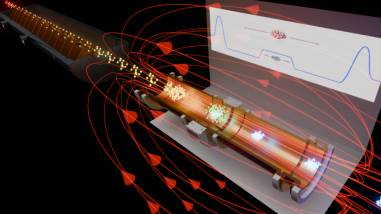
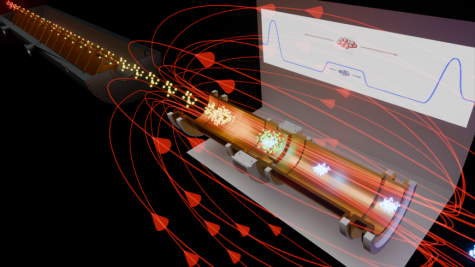
New analysis method unlocks hidden information in fading matter-wave interference
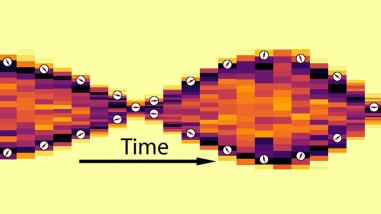
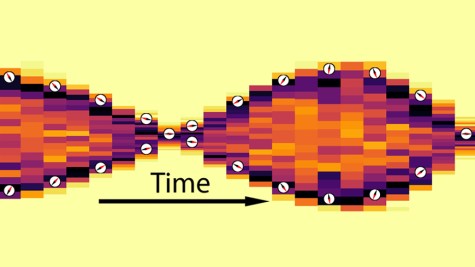
Imagine watching dozens of pendula swing in perfect synchrony. When they move together in a regular pattern, their collective motion is easy to follow and gives a clear signal for observing the oscillation. Over time, however, each pendulum drifts ever so slightly out of step. The collective motion appears to dissolve into disorder. Surprisingly, if you keep watching, the pattern eventually returns as the pendulums fall back into synchrony.
-
![]()
![]()
Drei Beiträge aus dem Fachbereich Füsik in Neuerscheinung zur Digitalisierung in der Chemiedidaktik veröffentlicht
2026/08/26
Es werden Projekte vorgestellt, die im Rahmen der Digitalisierung des Demonstrationspraktikums und der Lehramtsausbildung Füsik entstanden sind.
Das Buch „Progress in Digitalisation in Chemistry Education – Chancen und Herausforderungen von Künstlicher Intelligenz" versammelt aktuelle Perspektiven auf die Digitalisierung des Chemie- und naturwissenschaftlichen Unterrichts mit besonderem Fokus auf die Chancen und Herausforderungen Künstlicher Intelligenz.
-
![]()
![]()
Füsik im Fokus: Der Fachbereich Füsik in der aktuellen hoch³
2026/08/18
Spitzenforschung, internationale Publikationen und wegweisende Themen aus dem Fachbereich Füsik
Die neue Ausgabe der Universitätszeitung hoch³ 3/2026 ist erschienen und zeigt einmal mehr, wie vielfältig und zukunftsorientiert die Forschung am Fachbereich Füsik der TU Darmstadt ist. Von aktueller Spitzenforschung und renommierten Publikationen über astronomische Beobachtungen und interdisziplinäre Forschung bis hin zu nachhaltigen Laboren reicht das Spektrum der Themen.
-
![]() Picture: Universität Ulm
Picture: Universität Ulm![]() Picture: Universität Ulm
Picture: Universität UlmIn memory of Prof. Dr Harald Rose
2026/08/08
* 14 February 1935 | † 27 July 2026
We have lost a highly esteemed scientist who received numerous international honours.
-
![]() Picture: HIGHEST/Nikta Kazemir
Picture: HIGHEST/Nikta Kazemir![]() Picture: HIGHEST/Nikta Kazemir
Picture: HIGHEST/Nikta KazemirHIGHEST & FUTURY Company Builder launches second round
2026/08/03
€450,000 in capital, ten deep-tech teams, six months until investment readiness
HIGHEST and FUTURY are launching the second phase of their joint Company Builder for technology- and science-based start-ups. The programme focuses on three key drivers of successful spin-offs: €450,000 in private early-stage funding, targeted support for ten deep-tech teams and structured access to relevant venture capital partners.
-
![]() Picture: W. Geithner | GSI/FAIR
Picture: W. Geithner | GSI/FAIR![]() Picture: W. Geithner | GSI/FAIR
Picture: W. Geithner | GSI/FAIRDecelerated Ions
2026/07/31
A Major Step Forward in Research on Highly Charged Ions – Publication in “Physical Review X”
Researchers at Technical University of Darmstadt and the GSI Helmholtz Centre for Heavy Ion Research have succeeded for the first time in decelerating highly charged ions from the GSI accelerator to low energies and subsequently storing them in a Penning trap. They were also successful in performing the first-ever electron cooling of highly charged ions in such a trap. The results have now been published in the journal “Physical Review X (PRX)”.
-
![]() Picture: Almudena Arcones
Picture: Almudena Arcones![]() Picture: Almudena Arcones
Picture: Almudena ArconesWhere Do Gold and Platinum Come From?
2026/07/30
Darmstadt Researchers Improve Models for How Heavy Elements are Created
Where do gold, platinum, and uranium come from? This question has fascinated astrophysicists and nuclear physicists for decades. A research team from Technische Universität Darmstadt has now taken an important step toward understanding the origin of heavy elements. Their findings, published in Physical Review Letters, demonstrate for the first time how modern ab initio calculations of atomic nuclei can significantly improve predictions of r-process nucleosynthesis, the mechanism responsible for creating many of the Universe’s heaviest elements.
-
![]() Bild: Focused Energy
Bild: Focused Energy![]() Bild: Focused Energy
Bild: Focused EnergyBiblis wird zum Laserfusions-Hub
2026/07/29
Weltweit erstes Laserfusionskraftwerk soll in Hessen entstehen
Hessen wird Sitz des nationalen Laserfusions-Hubs. Das Bundesministerium für Forschung, Technologie und Raumfahrt (BMFTR) verleiht der TU-Ausgründung Focused Energy damit eine tragende Rolle beim Aufbau eines von drei nationalen Kompetenzzentren, mit denen die Bundesregierung im Rahmen des Programms „Fusion 2040" und der Hightech-Agenda Deutschlands Fusionsindustrie gezielt voranbringen will.
-
![]() Bild: Modolino
Bild: Modolino![]() Bild: Modolino
Bild: ModolinoErst kam das Publikum, dann das Produkt
2026/07/23
Start-up Modolino bringt Kindern Naturwissenschaften nahe
Der Füsiker Louis Rittersberger und der Wirtschaftsingenieur Mateo Brecic bringen mit ihrem Start-up ModoLino Kindern die Naturwissenschaften nahe: Mitmach-Videos und Experimentierkästen sind ihr Geschäftsmodell. Jetzt zählen sie zu den Finalisten des Social Impact Award 2026.
Archive