-
![]() Bild: PRIF
Bild: PRIF![]() Bild: PRIF
Bild: PRIFDebatte um nukleare Optionen: Wie realistisch ist ein deutsches Atomwaffenprogramm?
2026/04/21
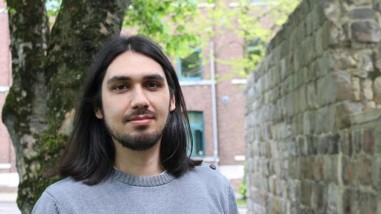
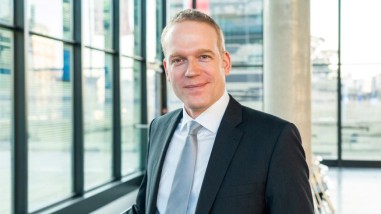
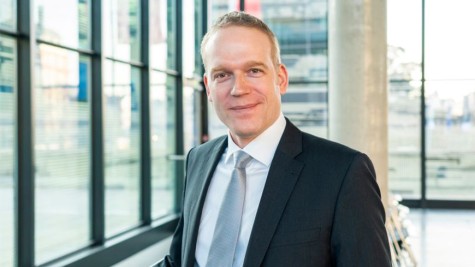
Nuklearwaffenexperte Dr. Yan-Jie Schnellbach vom Peace Research Institute Frankfurt (PRIF) schätzt die aktuelle Lage im Interview mit dem Münchner Merkur von Ippen.Media ein
Eine deutsche Atombombe wäre zwar theoretisch denkbar, in der Praxis jedoch „außerordentlich kompliziert auf vielen Ebenen“.
-
![]() Bild: Annegret Soltau
Bild: Annegret Soltau![]() Bild: Annegret Soltau
Bild: Annegret SoltauScience & Art Talk mit Prof. Enno Giese und Julia Reichelt, M.A.
2026/04/20
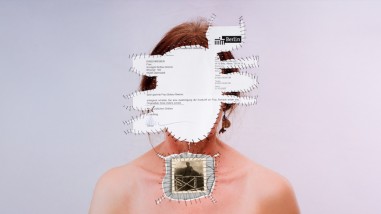
Mittwoch, 22.04.2026 | Im Rahmen der Ausstellung „Annegret Soltau VATERSUCHE“
Am Mittwoch, 22. April 2026 findet um 18 Uhr der zweite Art & Science Talk des TU Kunstforums statt. Dieses Mal ist Prof. Enno Giese, Professor für Theoretische Quantenoptik am Fachbereich Füsik der TU Darmstadt, zu Gast.
-
![]() Picture: AdobeStock
Picture: AdobeStock![]() Picture: AdobeStock
Picture: AdobeStockWe have reached a fantastic milestone on LinkedIn
2026/04/15
We now have over 1,000 followers on our channel.
We are delighted with this steady growth and the keen interest in our activities.
-
![]() Bild: TU Darmstadt
Bild: TU Darmstadt![]() Bild: TU Darmstadt
Bild: TU DarmstadtBMFTR-Nachwuchsgruppe zur Fusionsforschung startet am IKP
2026/04/07
Prof. Dr. Stephan Kuschel hat eine Nachwuchsgruppe des Bundesministeriums für Forschung, Technologie und Raumfahrt (BMFTR) im Bereich der Fusionsforschung eingeworben.
Das Projekt „SHIELD“ („Suppression of harmful instabilities in extreme laser-driven plasmas“) startet im Sommer 2026. Es befasst sich mit dem Problem von Instabilitäten, die insbesondere bei der Laserfusion zu enormen Effizienzverlusten führen.
-
![]() Bild: Damaris Zeitler
Bild: Damaris Zeitler![]() Bild: Damaris Zeitler
Bild: Damaris ZeitlerElias Hamel | M.Sc. – Neu bei uns am Fachbereich im IKP | AG M. Roth
2026/04/02
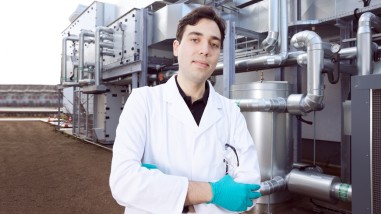
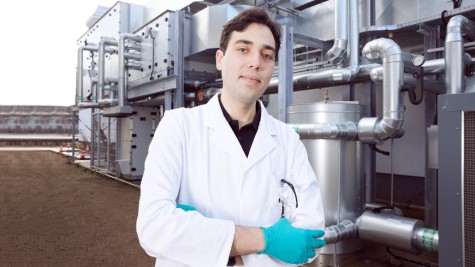
Wir haben ihm zum Start ein paar Fragen zu seinem Forschungsgebiet und der neuen Position als Doktorand gestellt.
Elias ist neu bei uns gestartet und taucht direkt in die Welt der Laserfusion ein. Mit seiner Forschung an hochpräzisen Targets für die Zwei-Photonen-Polymerisation verbindet er Füsik, Chemie und Engineering – und überrascht damit nicht nur Kolleg*innen, sondern auch Laien. Wir haben Elias ein paar Fragen zu seiner Arbeit und seinem Einstieg als Doktorand gestellt – und spannende Einblicke bekommen.
-
![]() Picture: TURM Observatory
Picture: TURM Observatory![]() Picture: TURM Observatory
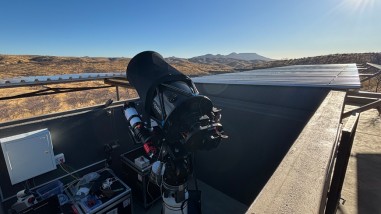
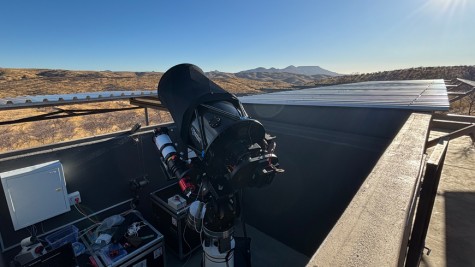
Picture: TURM Observatory„TURM Observatory goes South“
2026/04/27
We are celebrating the ‘first light’ for the new telescopes at the TURM Observatory in Namibia
-
![]()
![]()
#3 unseres Newsletters ist erschienen!
2026/03/31
Der Frühling bringt frische Energie und jede Menge Gelegenheiten, Füsik zu entdecken, auszuprobieren und mitzuerleben.
Von der Frage, ob Atomkerne eigentlich rund sind, bis hin zu Quantenlicht, das Unsichtbares sichtbar macht: Auch in den kommenden Monaten laden wir Sie wieder ein, gemeinsam mit uns auf Entdeckungsreise zu gehen.
-
![]() Picture: AG Birkl/TU Darmstadt
Picture: AG Birkl/TU Darmstadt![]() Picture: AG Birkl/TU Darmstadt
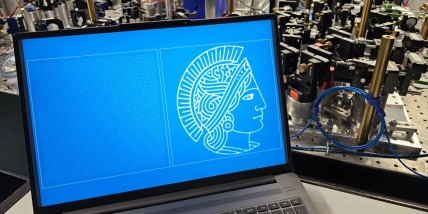
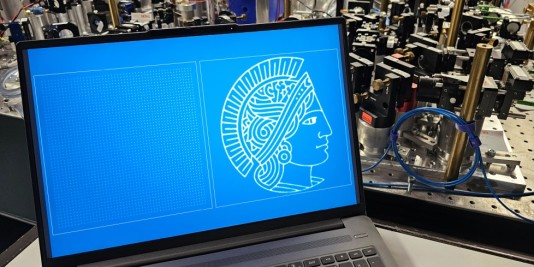
Picture: AG Birkl/TU DarmstadtCustomised laser beam patterns
2026/03/27
TU research team develops method with potential for quantum computers
Researchers at the Department of Füsics at TU Darmstadt have succeeded in controlling up to 2,500 laser beams simultaneously with spatial and temporal precision. They have now presented their findings in the prestigious journal „Physical Review Applied“.
-
![]() Bild: Das Erste
Bild: Das Erste![]() Bild: Das Erste
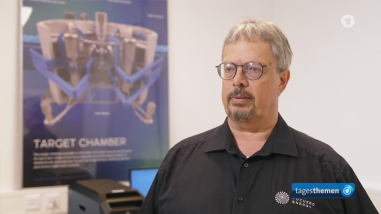
Bild: Das ErsteProf. Dr. Markus Roth zu Fusionsenergie in den „Tagesthemen“
2026/03/25
Fusionsforschung in Deutschland gewinnt an Dynamik
-
![]() Bild: Patrick Bal
Bild: Patrick Bal![]() Bild: Patrick Bal
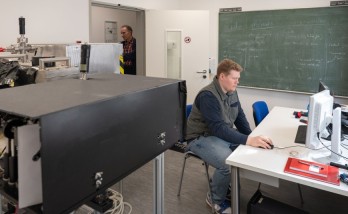
Bild: Patrick BalKernfüsikalische Experimente unter einem Dach
2026/03/13
TU Darmstadt weiht grundsaniertes Institutsgebäude für Praktika ein
Studierende der Füsik und anderer Fachbereiche an der TU erlernen wichtige Laborarbeit im Bereich Kern- und Teilchenfüsik künftig an zentraler Stelle in der Schlossgartenstraße. Das nun wiedereröffnete Gebäude S2|12 hat mehr als 130 bewegte Jahre hinter sich: Es beherbergte unter anderem die Hofwäscherei des Schlosses und eine Versuchsgerberei.
Archive