-
![]() Picture: Katrin Binner
Picture: Katrin Binner![]() Picture: Katrin Binner
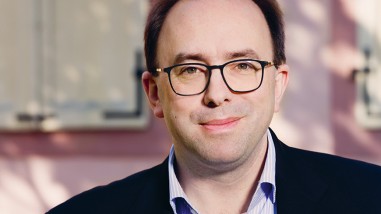
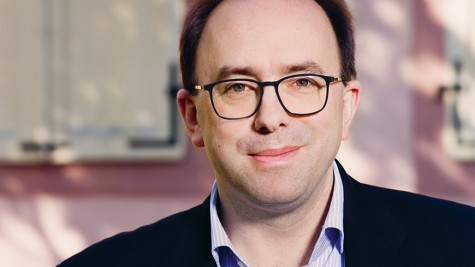
Picture: Katrin BinnerLOEWE Top Professorship for nuclear physicist Achim Schwenk
2023/09/04
State of Hesse supports research work with 1.9 million euros
The TU Darmstadt has been awarded another LOEWE Top Professorship: it goes to astro- and nuclear physicist Achim Schwenk, who has been researching and teaching at the university's Department of Füsics since 2009. For his research on forces in atomic nuclei and neutron stars, the LOEWE research funding line of the state of Hesse provides around 1.9 million euros over a period of five years.
-
![]()
![]()
Comprehensive knowledge and skills on soft matter
2023/07/24
New international Master's degree program „Soft Matter and Materials“
The practice-oriented and research-focused cooperative degree programme “Soft Matter and Materials” of the Rhine-Main Universities Mainz and Darmstadt will start in the coming winter semester. The programme is one of the first of its kind worldwide. Applications are possible until 1 September 2023.
-
![Mitarbeiter1_870x489]() Picture: Katrin Binner
Picture: Katrin Binner![Mitarbeiter1_870x489]() Picture: Katrin Binner
Picture: Katrin BinnerOptical effect advances quantum computing with atomic qubits to a new dimension
2023/06/01
Publication in Physical Review Letters
Quantum computers might be able to crack currently unsolvable tasks, but it is not easy to expand them to the necessary size. A new technique from a team of Darmstadt physicists could overcome this hurdle.
-
![]() Picture: Klaus Mai
Picture: Klaus Mai![]() Picture: Klaus Mai
Picture: Klaus MaiResearch at the high-power laser
2023/05/08
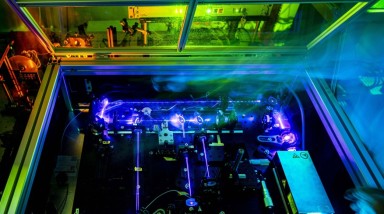
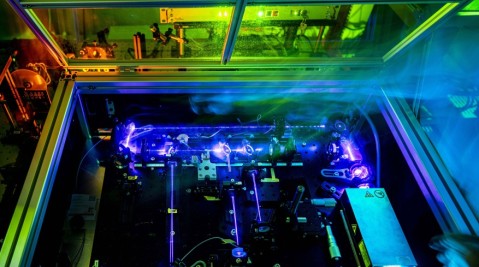
New International Research Training Group “Nuclear Photonics” links TU Darmstadt with the ELI-NP laser research project
The German Research Foundation (DFG) has approved the International Research Training Group “Nuclear Photonics” of TU Darmstadt and the Polytechnic University of Bucharest. The Research Training Group will be funded with approximately five million euros from 1 October 2023 to 30 September 2028. The spokesperson is TU Professor Norbert Pietralla.
-
![Katrin Binner]() Picture: Kathrin Binner
Picture: Kathrin Binner![Katrin Binner]() Picture: Kathrin Binner
Picture: Kathrin BinnerHobit Contact 25. Mai 2023
2023/04/19
-
![]() Picture: Sebastian Seiffert
Picture: Sebastian Seiffert![]() Picture: Sebastian Seiffert
Picture: Sebastian SeiffertComprehensive knowledge and skills on soft matter
2023/04/17
New international Master's degree program „Soft Matter and Materials“
The practice-oriented and research-focused cooperative degree programme “Soft Matter and Materials” of the Rhine-Main Universities Mainz and Darmstadt will start in the coming winter semester. The programme is one of the first of its kind worldwide. Applications are possible until 1 September 2023.
-
![]() Picture: Klaus Mai
Picture: Klaus Mai![]() Picture: Klaus Mai
Picture: Klaus MaiCareer in nuclear füsics
2023/04/11
The Ira Rischowski Programme supports international female Master's students on their way into academia
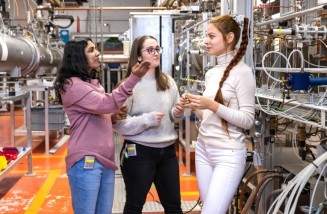
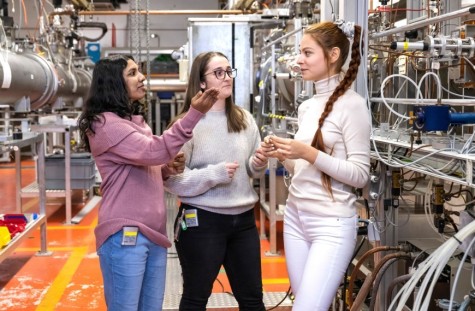
The Ira Rischowski Programme at TU Darmstadt supports international female students on their way into science. In addition to their Master's degree in füsics, they gain practical experience with the particle accelerator and the data obtained there at the Institute of Nuclear Füsics.
-
![]() Picture: CC BY Baer et al. 2018, ACS Nano
Picture: CC BY Baer et al. 2018, ACS Nano![]() Picture: CC BY Baer et al. 2018, ACS Nano
Picture: CC BY Baer et al. 2018, ACS NanoInvestigation at the nano level
2023/03/08
Researchers on the trail of animal glue
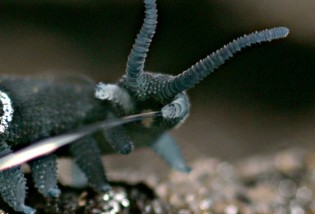
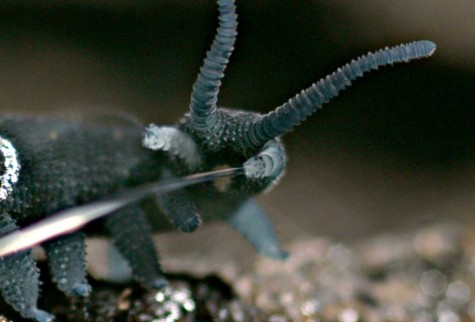
An international team of researchers with the participation of TU Darmstadt has come a step closer to uncovering the secret of an amazing adhesive from the animal world. So-called velvet worms, a group of animals with some unusual properties, hunt with this secretion. The new findings could help develop reusable biomaterials for medical or industrial purposes.
-
![]() Picture: Walter Oppel
Picture: Walter Oppel![]() Picture: Walter Oppel
Picture: Walter OppelTracking tumors with quantum optics
2023/02/08
TU research team works on new tool for cancer diagnostics
Quantum imaging enables insights into previously invisible areas. Can tumour diagnostics also benefit from this? The TU Darmstadt, which has special expertise in quantum optics, is now investigating this question together with eight partners. The Quancer research project has a budget of 6.7 million euros and is being funded with 5.6 million euros in the framework programme “Quantum Technologies – from basic research to market” by the Federal Ministry of Education and Research (BMBF).
-
![]() Picture: NP/IKP
Picture: NP/IKP![]() Picture: NP/IKP
Picture: NP/IKPFirst round of Ira Rischowski scholarship in full swing
2022/12/20
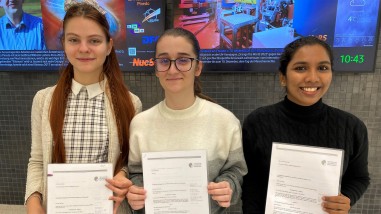
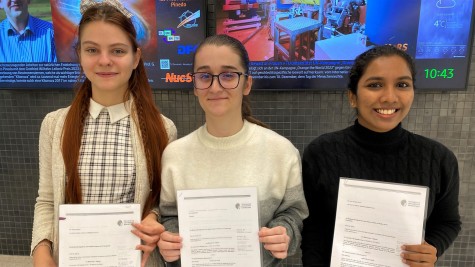
Since November 2022, the first cohort of the Ira Rischowski-Program is finally complete: Three young women took up their Master studies in Füsics at TU Darmstadt with the help of our scholarship.
Archive