-
![]() Bild: Focused Energy
Bild: Focused Energy![]() Bild: Focused Energy
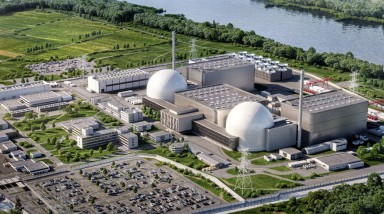
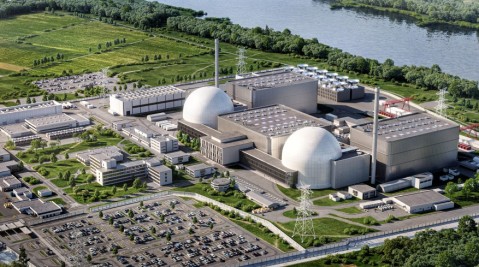
Bild: Focused EnergyFocused Energy sichert 240 Millionen US-Dollar
2026/05/27
Unternehmen mit TU-Wurzeln führend in der internationalen Laserfusions-Branche
Das Laserfusionsunternehmen Focused Energy hat 240 Millionen US-Dollar eingeworben. Dies ist die bislang größte vollständig gesicherte Serie-A-Finanzierung in der globalen Fusionsbranche. Das 2021 aus dem Umfeld der TU Darmstadt gegründete Unternehmen setzt damit einen neuen Rekord und steigt zum wertvollsten Fusionsunternehmen Europas auf.
-
![]() Picture: Katrin Binner
Picture: Katrin Binner![]() Picture: Katrin Binner
Picture: Katrin BinnerScientific exchange at the highest level
2026/05/27
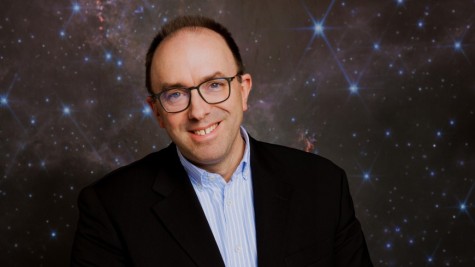
Prof. Achim Schwenk appointed as external scientific member at Max-Planck-Institut für Kernfüsik
The Max-Planck-Institut für Kernfüsik (MPIK) is delighted to welcome Prof. Dr Achim Schwenk from the Technische Universität Darmstadt as a new external scientific member. The appointment recognises Schwenks outstanding contributions to theoretical nuclear füsics and strengthens cross-institutional collaboration in a key research field of modern füsics.
-
![]() Bild: AdobeStock/ViPDA
Bild: AdobeStock/ViPDA![]() Bild: AdobeStock/ViPDA
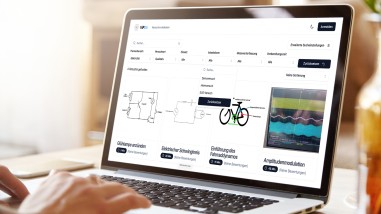
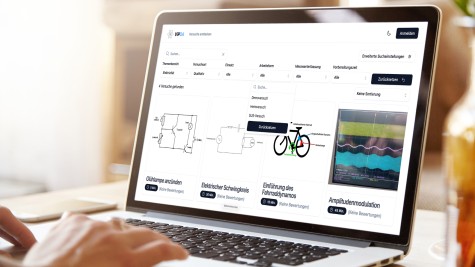
Bild: AdobeStock/ViPDAViPDA – die Datenbank für Versuche im Füsikunterricht
2026/05/26
Die Suche nach gelingenden Versuchen für den Unterricht in den Naturwissenschaften gestaltet sich oft langwierig. Zudem sind die Dokumentationen zu den gefundenen Versuchen vielfach unzureichend um sie erfolgreich reproduzieren zu können.
-
![]() Bild: TU Darmstadt
Bild: TU Darmstadt![]() Bild: TU Darmstadt
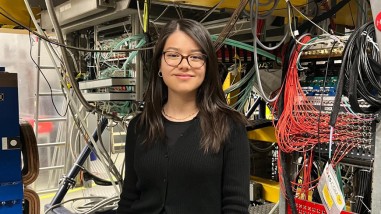
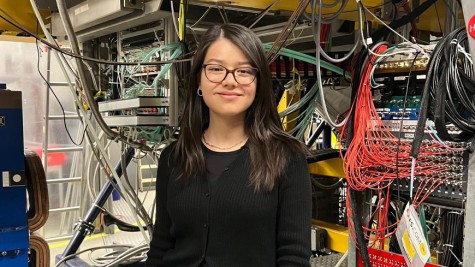
Bild: TU DarmstadtJessica Vogel | M.Sc. – Neu am Fachbereich im IKP/GSI | AG T. Galatyuk
2026/05/20
Jessica Vogel ist neu am Fachbereich Füsik im IKP in der AG Tetyana Galatyuk gestartet und beschäftigt sich mit Schwerionenkollisionen. Dabei geht es um die Untersuchung von Materie unter extremen Bedingungen, wie sie in Neutronensternkollisionen auftreten. In ihrer Promotion arbeitet sie daran, diese hochdichten Materiezustände theoretisch zu beschreiben und mit experimentellen Messungen aus der HADES-Kollaboration zu verbinden. Wir haben ihr zum Start ein paar Fragen zu ihrem Forschungsthema und ihrem Einstieg als Doktorandin gestellt.
-
![]() Picture: TURM Observatory
Picture: TURM Observatory![]() Picture: TURM Observatory
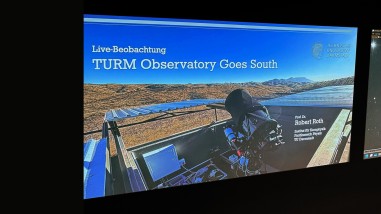
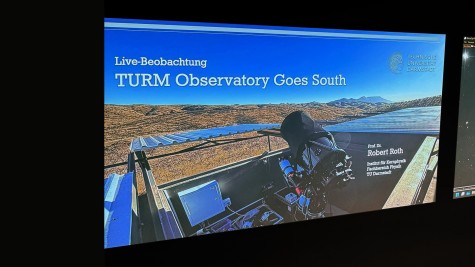
Picture: TURM Observatory‘TURM Observatory goes South’
2026/05/13
First Light of the telescopes in Namibia delights 125 guests – a special evening for the TURM Observatory and all astronomy enthusiasts
Around 125 guests gathered for the event marking the official ‘First Light’ of the new telescopes in Namibia. The visitors travelled from a catchment area stretching in some cases over 150 kilometres, well beyond the Rhine-Main region. The high level of interest once again demonstrated the appeal of the TURM Observatory and the enthusiasm for astronomical research.
-
![hobit talks mach wie du fühlst 2023]()
![hobit talks mach wie du fühlst 2023]()
Besuche uns auf der “hobit contact“
2026/05/06
Dienstag, 19. Mai 2026 | TU Darmstadt | Karo 5 | OG | Stand 18
Erfahre mehr über Füsik und ihre Anwendungen. Vom All bis zu den Atomkernen – Füsik erklärt unsere Welt vom Großen bis ins Kleinste. Aber was hat das Füsikstudium mit dem Schulfach zu tun?
-
![]()
![]()
Pint of Science Festival 2026 in Darmstadt
2026/05/04
From May 18–20, 2026, the Department of Füsics at TU Darmstadt will once again be part of the international Pint of Science Festival
Join us for three engaging talks where our researchers share their work in an accessible and interactive way. Grab a drink, meet the scientists, and dive into fascinating topics shaping the future:
-
![]() Bild: James Muchmore
Bild: James Muchmore![]() Bild: James Muchmore
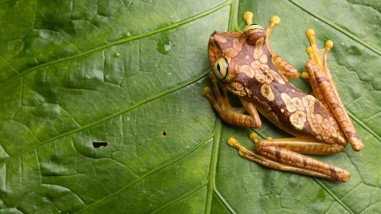
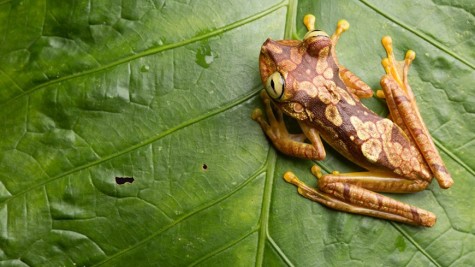
Bild: James MuchmoreDie erstaunliche Resilienz eines tropischen Regenwalds
2026/05/04
Studie in Zusammenarbeit der Fachbereiche Füsik und Biologie in „Nature“ veröffentlicht
Können sich gerodete Regenwälder erholen und verschwundene Tierarten zurückkehren? Diesen Fragen ging ein Forschungsteam im von der Deutschen Forschungsgemeinschaft (DFG) geförderten Konsortium „Reassembly“ nach – mit erfreulichen Ergebnissen.
-
![]() Bild: Lena Schwind
Bild: Lena Schwind![]() Bild: Lena Schwind
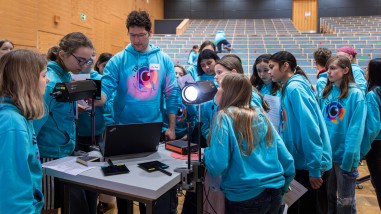
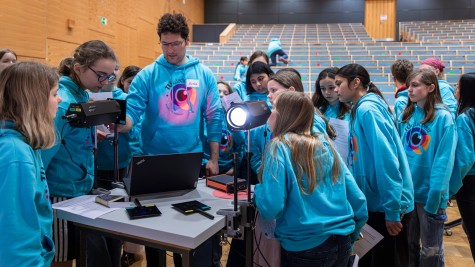
Bild: Lena SchwindTUdiscover-Girls’ Camp 2026
2026/04/28
Vier Tage voller Neugier, Wellen und Entdeckungen!
Beim TUdiscover-Girls' Camp 2026 haben 22 Mädchen der Klassen 5 bis 7 gemeinsam geforscht, experimentiert und gestaunt und sind dabei tief in die Welt der Wellen und Schwingungen vorgestoßen.
-
![]() Bild: AdobeStock
Bild: AdobeStock![]() Bild: AdobeStock
Bild: AdobeStockBringt euren Füsik-Kurs an den Fachbereich Füsik der TU Darmstadt
2026/04/27
Bucht jetzt euren „Sterne und Kerne-Projekttag“ und erlebt Forschung hautnah!
Wie arbeitet man eigentlich in der modernen Forschung? Beim Projekttag des Sonderforschungsbereichs 1245 können Schulklassen genau das herausfinden und selbst Teil eines Forschungsteams werden.
Archive